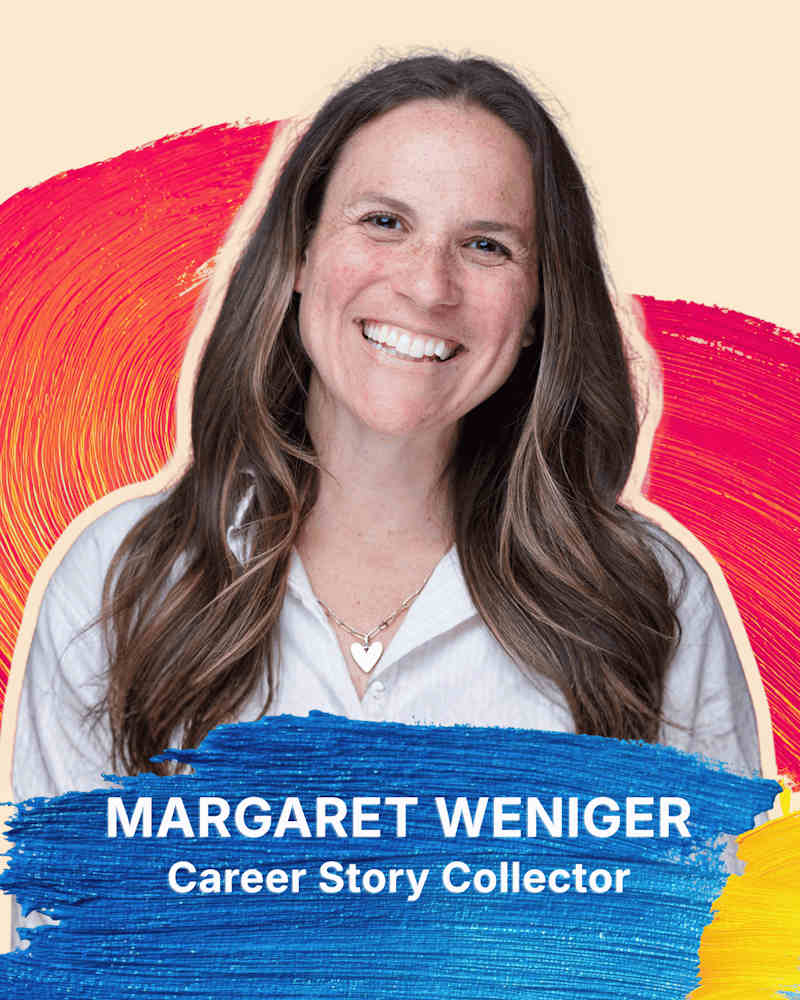
The TEDxAtlanta conference and year-round programming is fueled by four groups of amazing individuals: speakers, volunteers, attendees and partners. In our Partner Spotlight series, we invite you to meet the businesses that lending us either their time and expertise, or their financial support in service of furthering the mission of spreading ideas that spark curiosity, civil discourse and ultimately a more cohesive community.
In conversation with Claire Angelle, founder of Angelle Consulting.
What inspired you to start Angelle Consulting?
My journey into entrepreneurship was a leap of faith, born more out of necessity than a plan.
In 2018, after years of working in communications and international relations for the French Foreign Service and for the City of Atlanta, I accepted a role with a media group in New York. Just six weeks in, life took an unexpected turn — the company faced financial collapse, and the entire team, myself included, was laid off.
I registered an LLC overnight with the simple goal of staying afloat. To my surprise, Angelle Consulting was profitable from its very first month. What began as a temporary solution quickly evolved into something much bigger. I realized that my passion for amplifying meaningful stories aligned perfectly with the needs of purpose-driven leaders and organizations.
Entrepreneurship is not easy. What were some of your greatest challenges and triumphs?
A few years ago, my family faced a series of deeply personal hardships. In the span of six months, we lost my father-in-law to Covid-19, a colleague tragically passed in violent circumstances, we welcomed a family member struggling with mental health issues into our home, and we had to say goodbye to our beloved family dog. In the middle of it all, I had just hired my first full-time employee. It was chaotic, to say the least.
But challenges often breed innovation. We established clear processes at Angelle that allowed me to step back from the day-to-day operations far earlier than I anticipated. In turn, this freed me to focus on big-picture strategy and vision for the company. Although I was forced to cancel commitments and push deadlines, clients, friends, and family all met me with a level of compassion and understanding that I could have never expected. I ended up closer to many of the people around me than I had ever been before, and my business flourished despite the odds.
Tell us about Angelle. What makes it special?
At Angelle Consulting, our core values of care and connection, growth and progress, and transparency and accountability are the foundation of everything we do. We care deeply for each other, our clients, and the world around us, building genuine relationships and respecting boundaries. We believe in always learning and growing, not just for ourselves but to help our clients make a bigger impact. And we value being transparent and accountable, showing up as our authentic selves, communicating clearly, and owning our mistakes.
Today, in addition to client work, we provide pro-bono services to organizations we care deeply about including TEDxAtlanta and the Conscious Capitalism Atlanta Chapter. This dual approach allows us to promote two key aspects of our mission: the importance of storytelling (and sharing impactful stories) and a restorative alternative to traditional capitalism.
How would you describe the TEDxAtlanta partnership experience?
Partnering with TEDxAtlanta has been an incredibly rewarding experience. It’s given us the chance to connect with a community of changemakers and amplify ideas that truly matter.
The collaboration has sparked new relationships and reminds us why we do what we do. It’s more than just a partnership; it’s an opportunity to be part of something bigger.
The partnership has also created the opportunity to get team members more involved. My colleague Andie Orozco, is deeply involved — she helps place content for TEDxAtlanta speakers and pitches president and licensee Jacqui Chew for opportunities to share her insights more broadly. It’s been inspiring to see Andie take the lead and use her skills to support this collaboration. Her contributions not only strengthen our partnership but also reflect our team’s shared passion for spreading ideas that matter.
Are there specific goals you would like to achieve as part of the relationship?
For us, the most meaningful outcomes of our partnership with TEDxAtlanta aren’t just numbers — they’re about impact. We value the stories we can help share, the connections we foster, and the well-deserved recognition we can bring to TEDxAtlanta as a whole. Whether it’s through successful content placements or new collaborations that come out of this work, our goal is to amplify the voices that make a difference.
Join us at TEDxAtlanta 2025 and be part of the conversations shaping our collective future. This year’s event promises to amplify voices, share stories, and inspire action—aligning perfectly with the incredible work of partners like Angelle Consulting.
Final days to be part of this extraordinary experience before ticket prices increase on January 17, 2025. Buy your tickets today.
Learn more about the changemakers taking the stage at TEDxAtlanta.com.
The term AI flows around in today’s world in the same way air does, yet when it comes down to explaining what artificial intelligence is, I couldn’t seem to find a clear and concise way of defining it. Something about calling it an enhanced machine felt wrong because there are emotional and empathetic qualities to it that humanize it. At the same time, comparing AI to a human being doesn’t work because AI clearly has abilities to process and hold information that supersedes humans. While it can’t fully take over the human experience of living, feeling, and growing, it can process multitudes of information and act on it instead of just holding it. So how do we really define what AI is?
Many people think of AI as a tool—something to boost productivity and make processes more time efficient and accurate. However, tools by definition are a device or implement used to carry out a particular function. Traditionally we think of the tool as something that is hand held, whether that is literally or metaphorically in the sense that we control it and it acts as an extension to us, but the truth is AI has evolved into so much more.
Mustafa Suleyman’s talk, “What Is AI Anyway?” which describes AI as a new species prompted a whole new line of thought. Think of the human qualities we’ve imparted to it—learning behaviors and studying knowledge and history to mimic what we do. Now take these abilities and put them in a more accessible vessel like the technology we all have access to today. We’ve given AI the skill set it needs to exist in our world today, but supersede our abilities as humans. Instead of it being an extension or a tool, it’s turned into an invention, something we act as a parent towards allowing it to excel in its own way and exist as its own digital species.
This is such a powerful sentiment when you think about the capabilities of AI. “Today, the most advanced AIs consume more than eight trillion words in a single month of training,” says Suleyman. If a human being were to spend everyday of their life reading and consuming information, it would only be a fraction of what AI is capable of doing in a whole month.
Interested in learning what others are saying about AI and our collective future?
Join in the conversation at our TEDxAtlanta Salon on AI and the future.
DETAILS
Where: Atlanta Tech Park, Peachtree Corners
When: January 30, 2025, 5:30 pm – 9 pm
Tickets: Complimentary, RSVP today
While it does pass the average human with its ability to process information, there was one idea Suleyman brought up that had me thinking about the capabilities of AI and how it relates to us as people. AI has already proven its extraordinary IQ and EQ, but what we’re predicting for the future is its actions quotient, or AQ. Holding onto multitudes of knowledge isn’t new in the world of technology, but it’s the actions we take with the knowledge that are the turning point we’re approaching at the moment with AI.
To better understand this I turned to understanding how AI helped aid different industries, starting with the medical field. In Eric Topol’s talk “Can AI Catch What Doctor’s Miss?” he dives deeper into the term precision medicine, explaining that the need isn’t just for precision, but for accuracy. When a group of doctors and AI machines were given a scan of a retina, doctors were able to recognize the gender of the patient with 50% accuracy while AI was able to with 97% accuracy. He explained that AI was able to get a more holistic understanding of a patient from a simple scan, while doctors would require more information in order to get the bigger picture. This opens up opportunities to find diagnoses with more ease and require less resources to do so.
A common fear is the overwhelming abilities of AI leaving no room for humans to participate. But what these conversations have taught us is that taking a human centric approach is key. Understanding that this knowledge is built by humans for humans is what allows us to still maintain control over the technology. Much like tools they do aid our abilities, but unlike tools they have a certain level of autonomy that we allow it to have.
The way I see it, AI coexists in a way that allows technology to fill in the blind spots of people. As it develops, it becomes less of a tool and more of a companion.