Think about the man who had the most impact on who you are. Maybe it was your dad. Maybe it was a coach who saw something in you before you saw it in yourself. An uncle who picked up the phone. An older brother who just stayed. A mentor who told you the truth when no one else would.
Father’s Day is for all of them—the fathers and father figures in our lives who shaped who we are and how we see the world. Here are fourTEDx Talks that honor the full breadth of what it means to be that person for someone else, and how we can appreciate and honor them this Father’s Day.
Atlanta’s own Rob Hardy, the acclaimed director and executive producer behind Power Book III: Raising Kanan, All American, and The Quad, isn’t just a storyteller on screen. In this deeply personal TEDxAtlanta talk, he gets candid about his own journey as a son of a hard-working, divorced dad and eventually becoming a father himself, confronting the generational patterns he inherited and choosing to break them for the sake of his sons. It’s a reminder that intentional parenting isn’t just about being present or providing essentials; it’s about learning from your past, while seeing the reality of the present, and being transformed to create a better future. Watch the Talk here.
Glen Henry left a career in music after realizing that the biggest stage he’d ever stand on was his living room, and his biggest and most devoted fans were his kids. What followed was one of the most honest, hilarious, and heart-expanding talks about fatherhood and being a stay-at-home dad that you’ll ever watch. His main takeaway? As parents, we’re all in this together, and learning everyday. And just like attendance matters to success in a classroom, presence in the home with your kids is crucially necessary as a dad. Watch the Talk here.
What if the missing piece to a better world has been in our homes the whole time? Ned Schaut makes a compelling case that engaged, active fatherhood isn’t just good for families, but a force multiplier for communities, economies, and generations yet to come. This Talk is bold, hopeful, and worth every minute. Watch the Talk here.
Former NFL player, pastor, and founder of the Daddy Academy Otto Kelly argues that fatherlessness is at the root of nearly every major social ill, from teen pregnancy to incarceration. Drawing from his own experience of losing his dad in middle school, he makes a powerful case that you can heal your own father wound by fathering others, whether you’re a biological dad or not. It’s a call to every man in the room to be the father figure someone around them desperately needs. Watch the Talk here.
We want to wish a very Happy Father’s Day to every man who has ever showed up for a child, whether that child was still a tot or a middle-aged adult; their biological child or mentee; a child they planned and prayed for or an unexpected surprise; a child who had a village or none at all. The impact is not within the title of “father,” but in the actions, love, and care that is shown.
Growing up in Singapore, I learned about slavery as part of American history.
I learned about the transatlantic slave trade, about the Civil War, about Abraham Lincoln and the Emancipation Proclamation.
And yes, I aced the history tests.
But didn’t learn about Juneteenth.
In fact, I didn’t encounter Juneteenth until the late 2010s, after I had moved to the United States and become deeply involved in the TED and TEDx communities.
Looking back, I can’t believe how I could I know so much about slavery and emancipation, and yet not know about the day that commemorates the moment when more than 250,000 enslaved people in Texas finally learned they were free!
The answer, I think, is that I knew the history, but I didn’t yet understand the larger story.
School taught slavery as an event in time. It didn’t teach us freedom is an ongoing pursuit.
That understanding came through years of listening.
As a TEDx organizer, I have had the privilege of hearing thousands of speakers and their ideas. Along the way, I have come to appreciate that freedom is not a fixed concept. Freedom is experienced differently depending on where you live, who you are, and what risks you face when you speak, worship, organize, create, or simply exist.
One of the earliest lessons came in 2011 on a shuttle ride from Palm Springs to TED.
I found myself seated next to a woman from Egypt. We spent much of the ride talking about her faith, her family, and what it meant for her to wear a hijab. At the time, I carried assumptions that many Westerners hold. I viewed the hijab primarily as a symbol of female oppression.
But as she shared her experience, it was like the sun climbing the sky and shedding light on a previously shadowed valley.
The hijab she described was not something imposed upon her. It was a personal expression of faith, identity and conviction. Whether I would make the same choice was not the point. For her, the ability to make that choice was itself an expression of freedom.
That conversation didn’t erase the reality that some women around the world are forced into practices they would not choose. But it taught me something equally important: freedom becomes harder to understand when we assume everyone experiences it through our own lens.
The more I listened to people from different countries, the more nuanced my understanding became.
And the more complex it became, the more honest it became.
Several TED Talks helped shape that journey.
One was by Bryan Stevenson, whose talk “We Need to Talk About an Injustice” challenged me to think about how systems can perpetuate inequality long after society declares itself equal.
Another was Chimamanda Ngozi Adichie’s “The Danger of a Single Story,” which explores how incomplete narratives shape our understanding of people and communities. The talk remains one of the clearest explanations of why listening matters.
I was also influenced by Mellody Hobson’s “Color Blind or Color Brave?” which argues that progress requires confronting uncomfortable realities rather than pretending differences do not exist. This one was particularly poignant growing up in a country that proclaims itself a meritocracy but is rife with racial stereotypes and prejudices that shape its social, political and economic institutions.
And I found myself returning repeatedly to the work of Isabel Wilkerson, whose exploration of caste and hierarchy helped me understand how systems can continue influencing outcomes long after the original structures appear to have disappeared.
These talks deepened my understanding of race and race in America.
They also helped me understand something broader: freedom is not just about what laws permit; freedom is also about what people can safely do.
As my involvement with TEDx grew, I became friends with organizers around the world. I discovered that the freedoms I had come to take for granted in America were not universally shared.
Before 2025, many of us in the United States operated with an assumption that we could curate ideas freely. We could invite speakers who challenged institutions, questioned leaders, exposed systemic failures, or criticized prevailing wisdom. Those conversations were often uncomfortable, but they were generally possible.
Not everyone had that luxury.
Friends and fellow organizers in places like China and Myanmar often navigated a very different reality. They had to think carefully about which ideas could be presented publicly, how certain topics were framed and what consequences speakers or organizers might face. Their work required a level of caution that many of us in the United States never had to consider.
The contrast was illuminating. What I viewed as normal since my arrival in this country was, in fact, a privilege: the freedom to question authority, to challenge the status quo, to share an unpopular idea.
Heck, the freedom just to gather around ideas at all.
These are freedoms that many people throughout history, and many people today, have had to fight to obtain.
That realization brought me back to Juneteenth.
When General Gordon Granger arrived in Galveston, Texas, on June 19, 1865, and announced that enslaved people were free, he was delivering news that should have reached them years earlier.
The delay itself tells an important story. A right can exist on paper before it exists in reality and a promise can be made before it is fulfilled.
A society can declare freedom before everyone experiences it.
That lesson extends far beyond the history of slavery in America.
Every nation has communities that continue to seek fuller participation, greater opportunity and equal recognition. The barriers differ. The histories differ. The political systems differ.
But the work remains remarkably similar.
Juneteenth reminds us that progress is not self-executing, and not, by any means, assured.
Progress requires vigilance, empathy AND a willingness to listen to experiences that aren’t our own.
As an immigrant, I arrived in America with knowledge of slavery as a historical fact. What I gained through TED and TEDx was a deeper understanding of freedom as a living, unfinished project.
Juneteenth is not simply a celebration of the end of slavery. It is a reminder that freedom must continually be defended, expanded and made real for more people.
Instead, I find myself asking better questions:
Who gets to speak?
Who gets to participate?
Who gets to belong?
Who gets to challenge power?
And who is still waiting to experience freedoms that others assume are already theirs?
Juneteenth invites us to keep asking those questions.
Not just about the past. But about the future we are creating together.
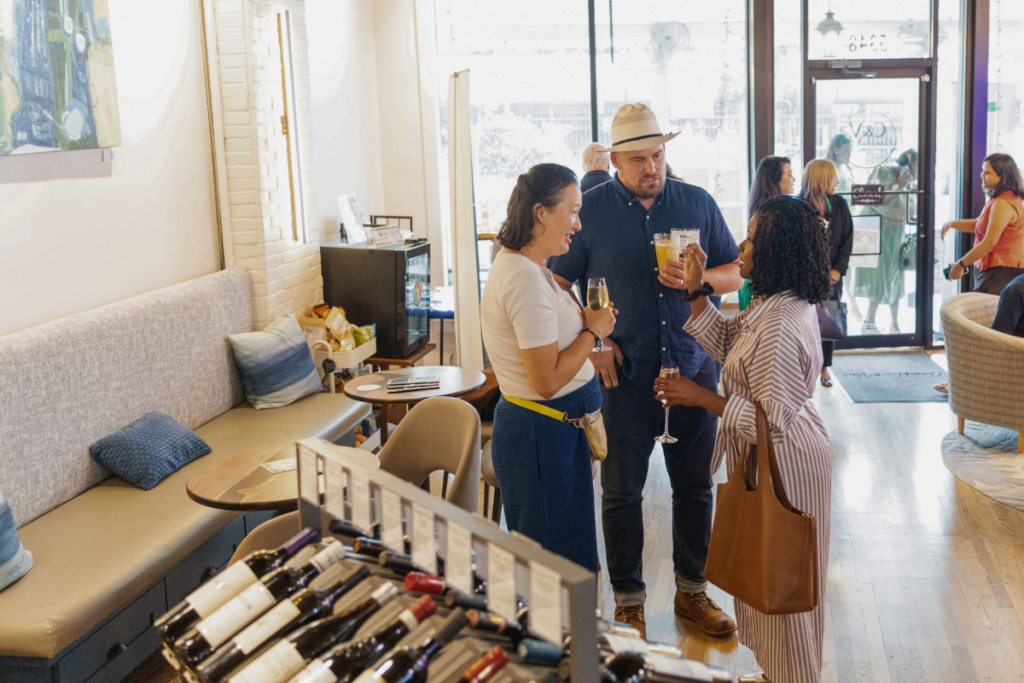
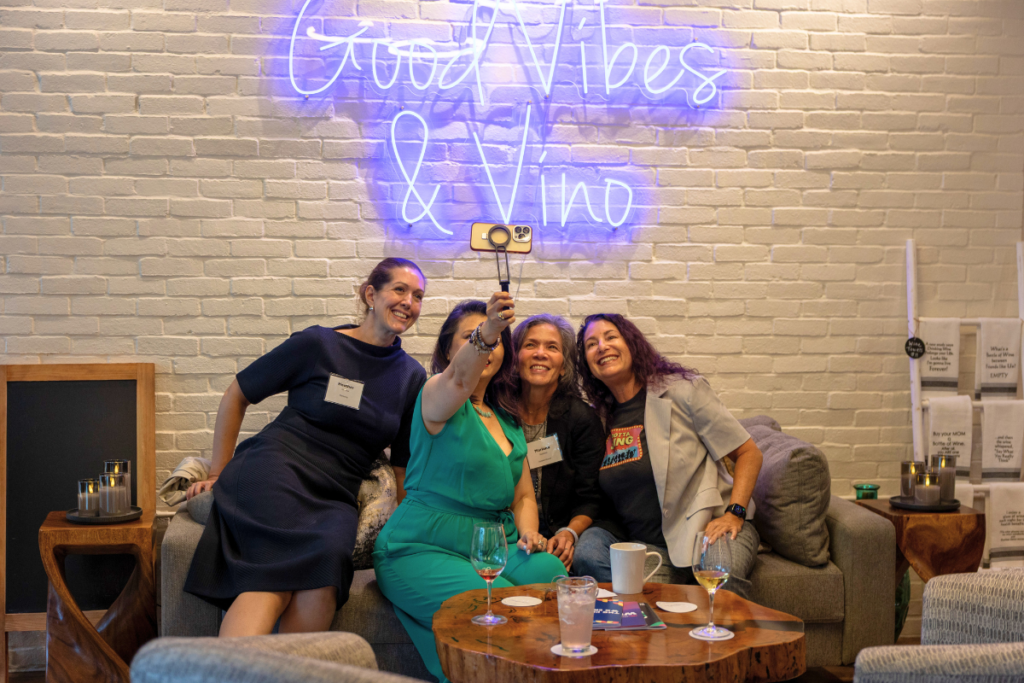
The rain may have kept Chamblee’s sidewalks quiet Tuesday evening, but inside Chamblee & Vine, the atmosphere told a different story.
Partners, volunteers, speaker alumni, collaborators and members of the TEDxAtlanta community gathered for an invitation-only toast to the 2026 season, raising a glass to the ideas, conversations and connections that will shape this year’s conference.
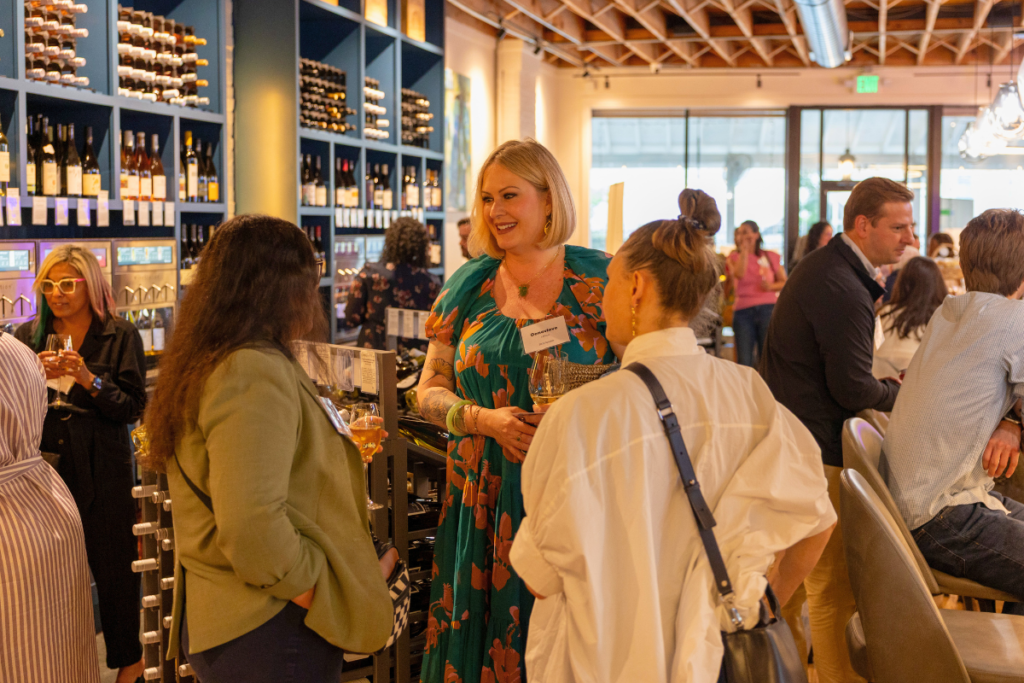
For two hours, the wine shop buzzed with introductions, reunions and the kind of conversations that seem to happen only when people from very different worlds find themselves around the same table.
TEDxAtlanta speaker alumni compared notes with first-time speakers preparing for their debut. Community partners connected with volunteers. Familiar faces caught up while new relationships formed over light bites and glasses of wine.
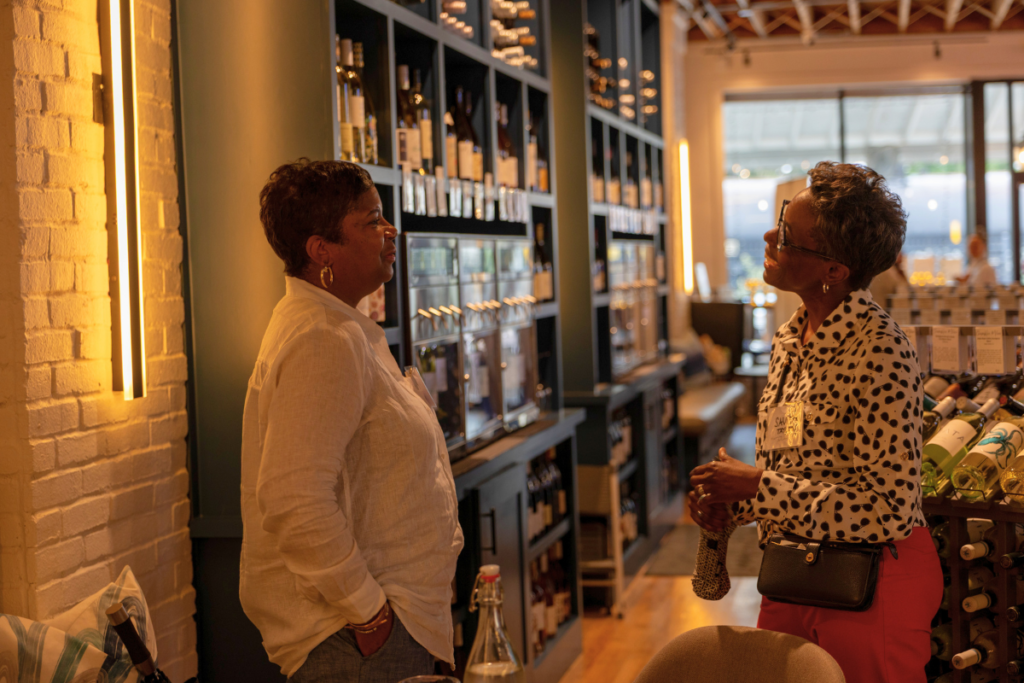
The evening’s unofficial theme was anticipation.
As guests settled in, TEDxAtlanta Licensee Jacqui Chew gathered the room for a conversation that bridged TEDxAtlanta’s past and future. Speaker alumni shared lessons from their own journeys to the red circle, offering practical advice and encouragement to the 2026 speaker class.
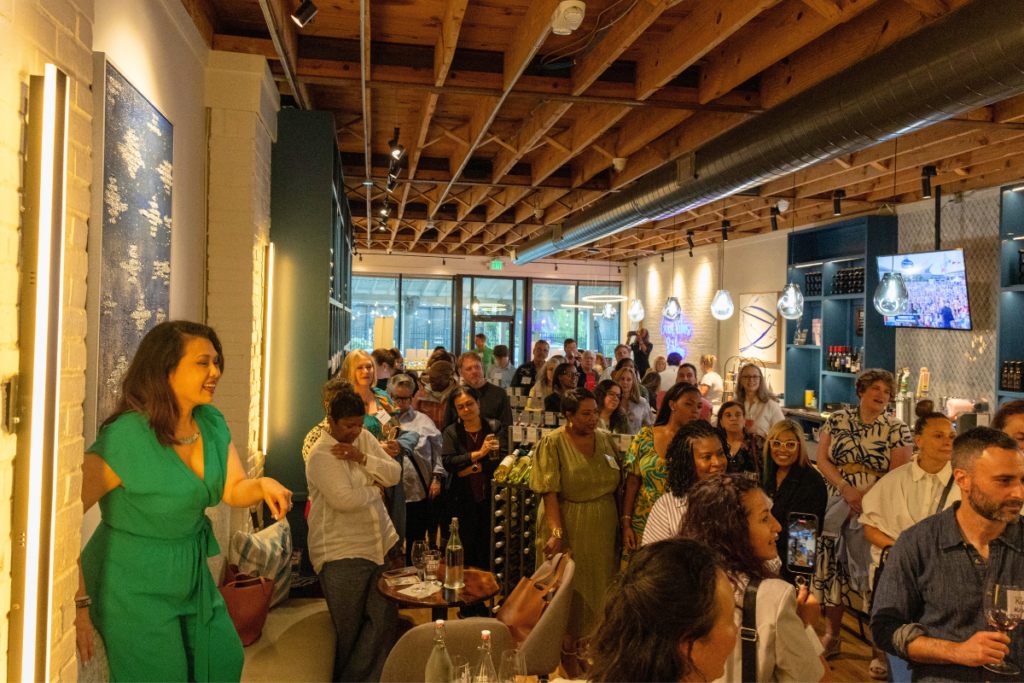
The message was consistent: Practice relentlessly. Trust the process. Use every resource available. And when the day arrives, let go of memorization and focus on connection.
Then came a moment reserved for those who will soon be taking the stage.
One by one, members of the 2026 TEDxAtlanta and TEDxAtlanta Youth speaker cohorts shared brief glimpses of the ideas they’ll bring to the stage this October.
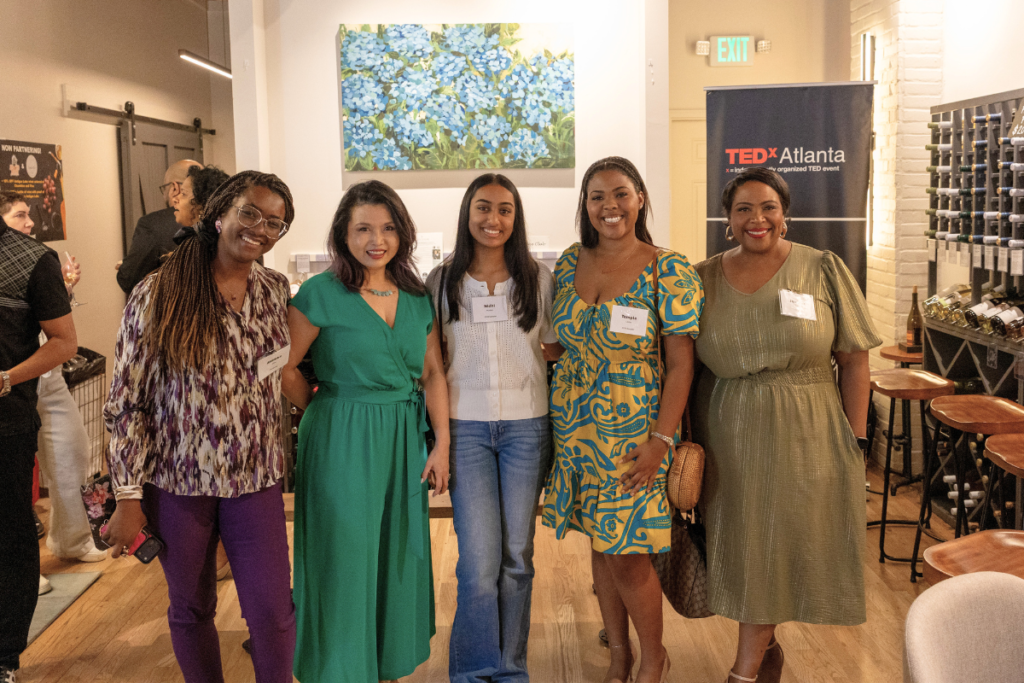
The reaction was immediate.
Heads nodded. Phones came out to capture notes. Conversations continued long after the introductions ended as guests sought out speakers whose ideas had caught their attention.
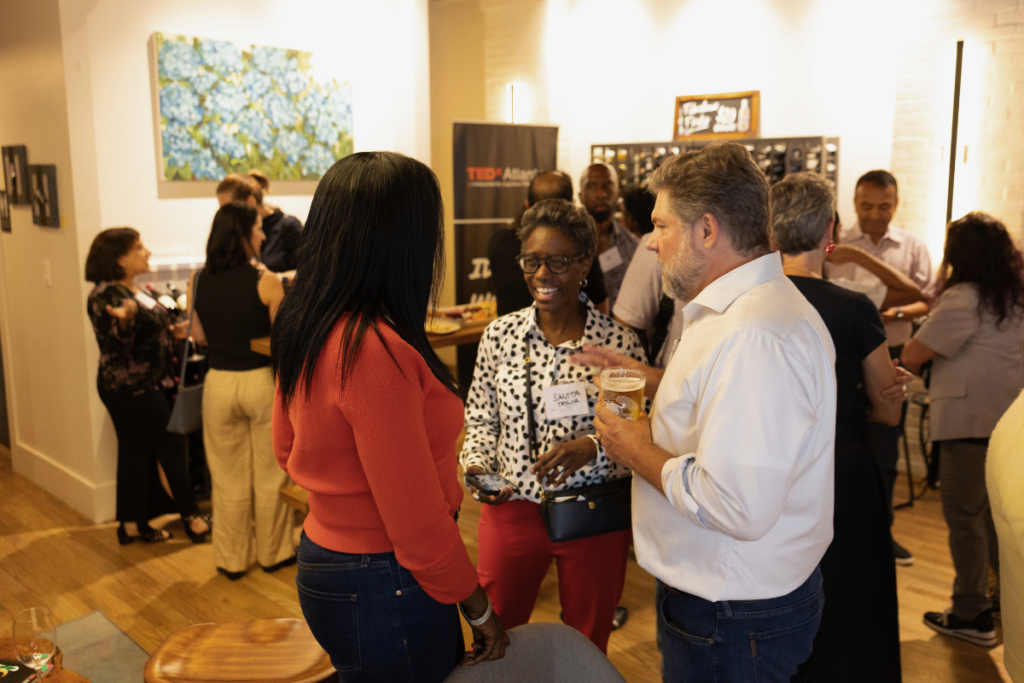
If the evening offered any preview of what’s ahead, it’s that TEDxAtlanta 2026 is already generating the kind of energy that happens when compelling ideas meet a community eager to engage with them.
October still feels months away.
After this night, it also feels a little closer.
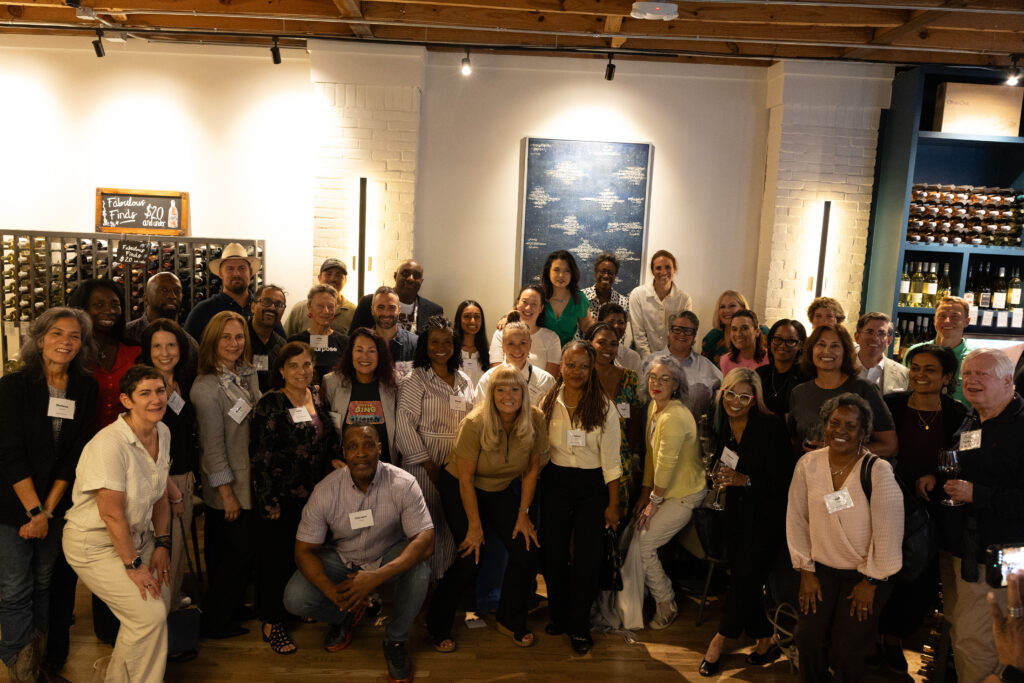
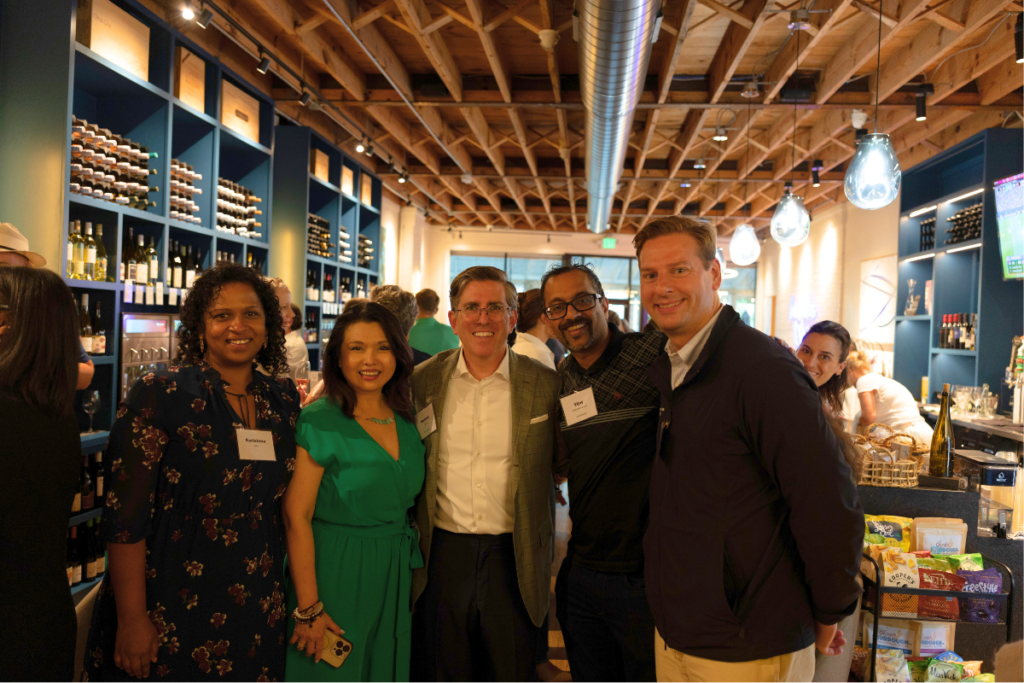
TEDxAtlanta speakers share fresh perspectives on sustainability, innovation and action.
Every June 5, the world marks World Environment Day, the UN’s biggest day for getting people to actually do something about the planet. It has run since 1973, and each year millions of people across more than 150 countries use it to push for cleaner air, less waste, and a healthier environment.
It is easy to treat a day like this as a far-off, global thing. But you do not have to look to a UN summit to find people working on it. Some of them are right here in Atlanta.
Here are three TEDxAtlanta speakers worth revisiting this World Environment Day, each tackling the environment from a completely different angle: the places we build, the things we wear, and the ground beneath our feet.
Sandeep Ahuja wants sustainable design to be the easy choice, not the hard one. She is co-founder and CEO of Cove, an AI platform that helps architects and engineers model a building’s energy and carbon performance early, when changes are still cheap to make. She has presented at the UN Environment Assembly and co-authored “Build Like It’s the End of the World,” a practical guide to decarbonizing architecture, engineering, and construction. Her argument is that better buildings start with better decisions at the drawing board.
Tia Robinson builds clothes only after someone orders them. As founder and CEO of Atlanta-based Vertical Activewear, she runs a vertically integrated, on-demand model that cuts out the overproduction driving fashion’s waste problem, where 30 to 40% of garments never sell. A trip to Ghana, where she saw beaches buried under discarded clothing, sharpened her conviction. Her talk, “How to be a sustainable online shopper,” puts real power in the hands of the person at checkout.
James Marlow has spent his career in clean energy, including leading Atlanta’s Southface Institute and working on more than 350 solar and energy storage projects. But his talk takes a quieter path. In “What I Learned Walking 100 Miles of Georgia’s Coastline,” he reflects on the restorative power of nature and what a long walk along the coast taught him about our relationship to the natural world. It is a reminder that protecting the environment starts with paying attention to it.
Three Atlanta thinkers, three very different answers to the same question: how do we take better care of the place we live? Watch their talks this week, then follow TEDxAtlanta for more ideas worth acting on.
Our 2026 mainstage conference lands October 2 and 3 at Atlanta International School in Sandy Springs, with the TEDxAtlanta Youth Conference following on October 3. Rooted in Atlanta’s spirit of reinvention and momentum, this year’s theme, Bold. Brave. Unbreakable., celebrates ideas that challenge convention, confront complexity, and imagine stronger futures in a rapidly changing world. Register now.