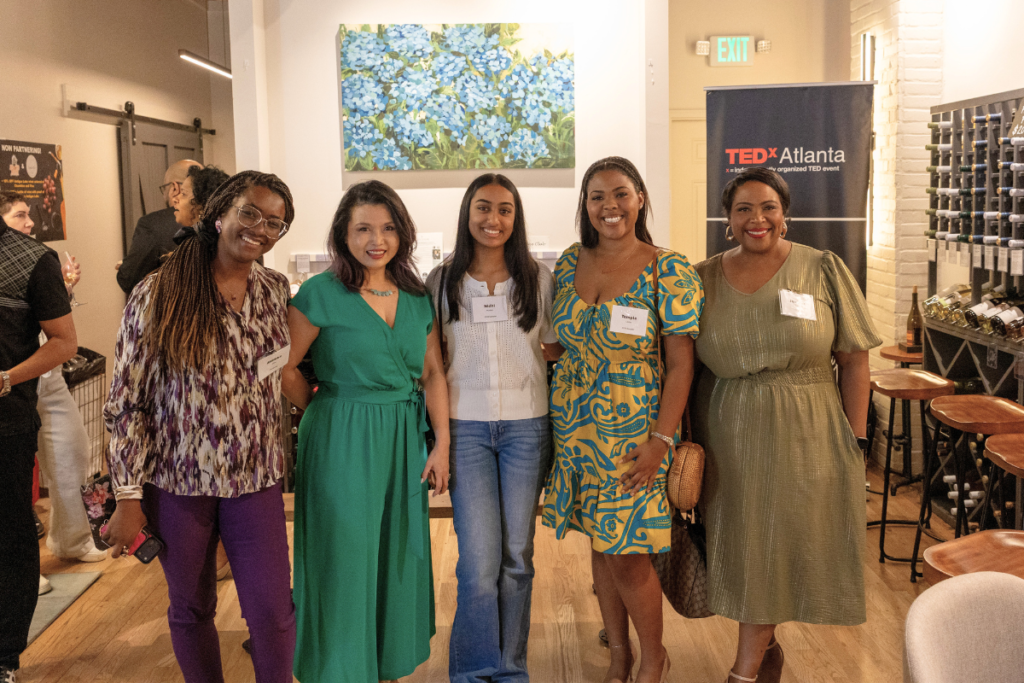
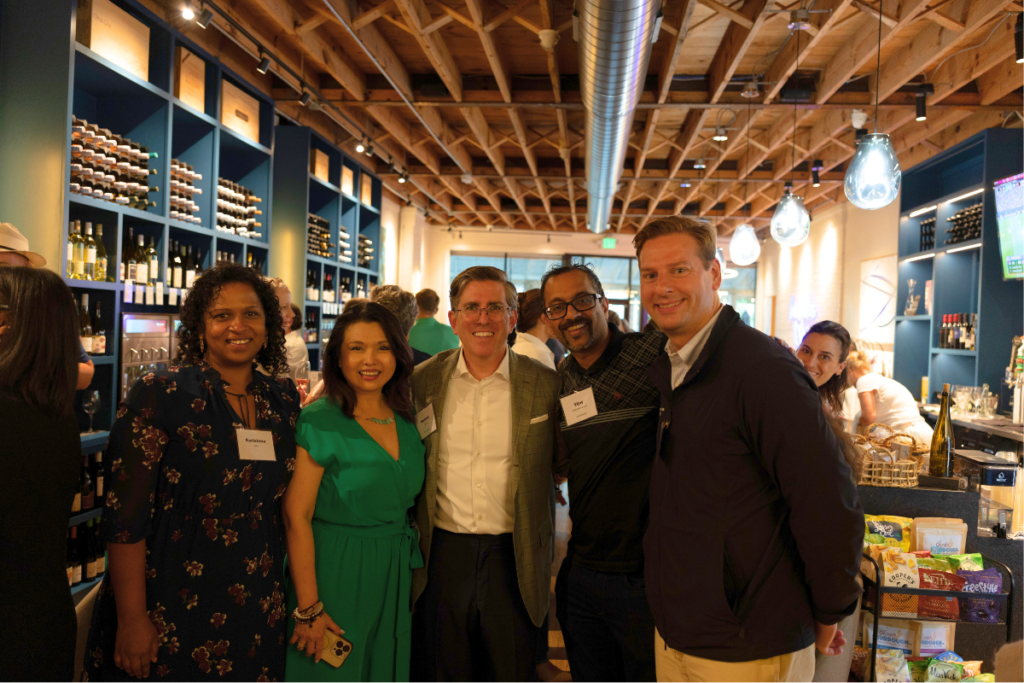
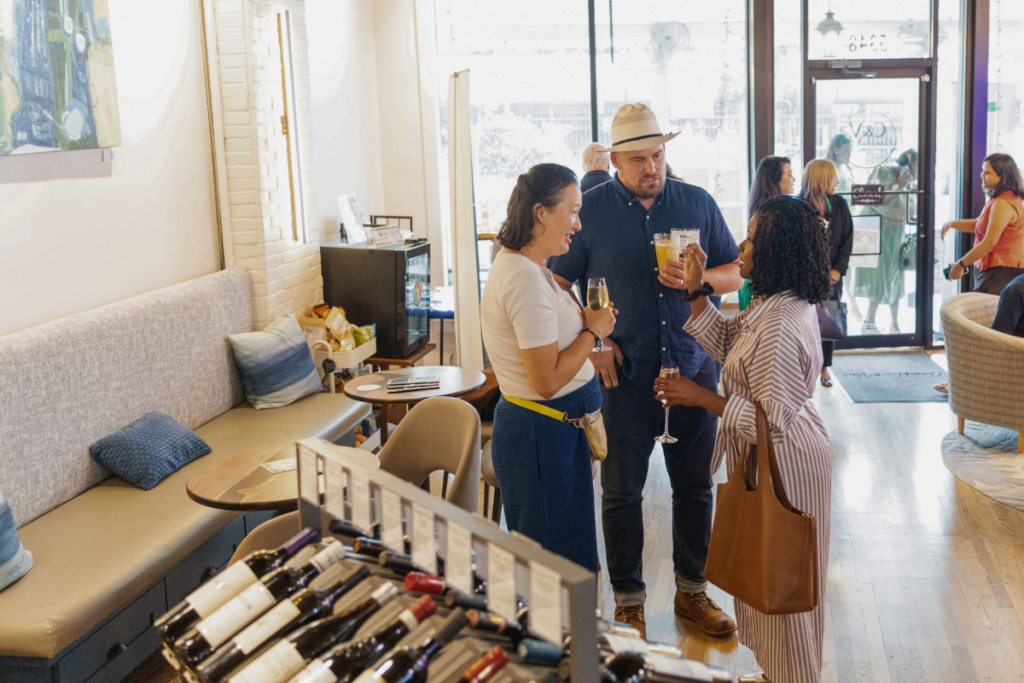
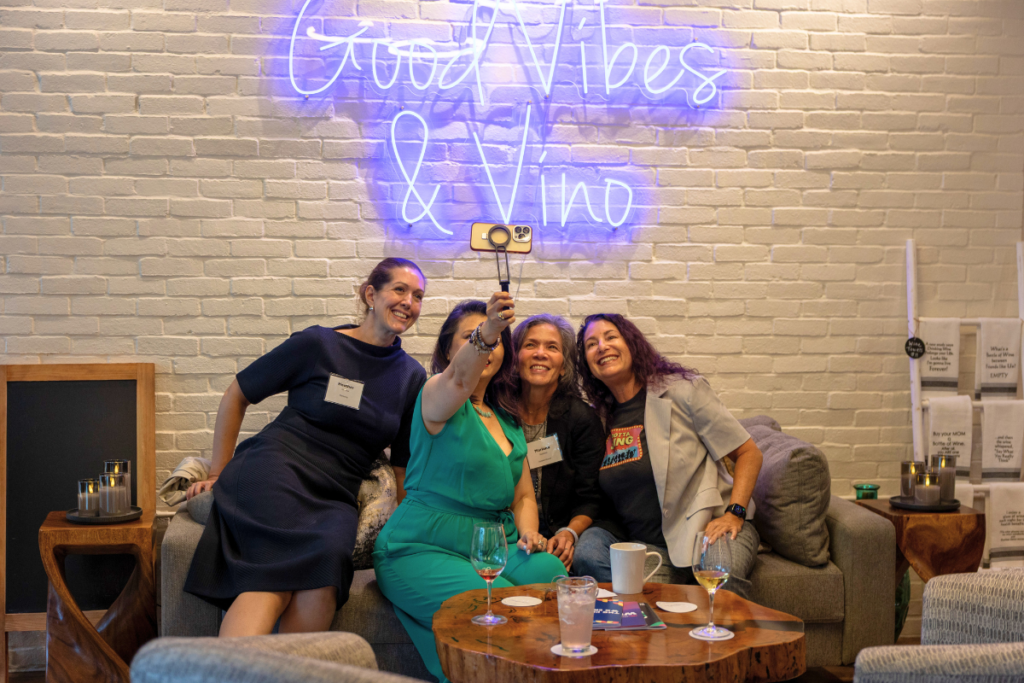
The rain may have kept Chamblee’s sidewalks quiet Tuesday evening, but inside Chamblee & Vine, the atmosphere told a different story.
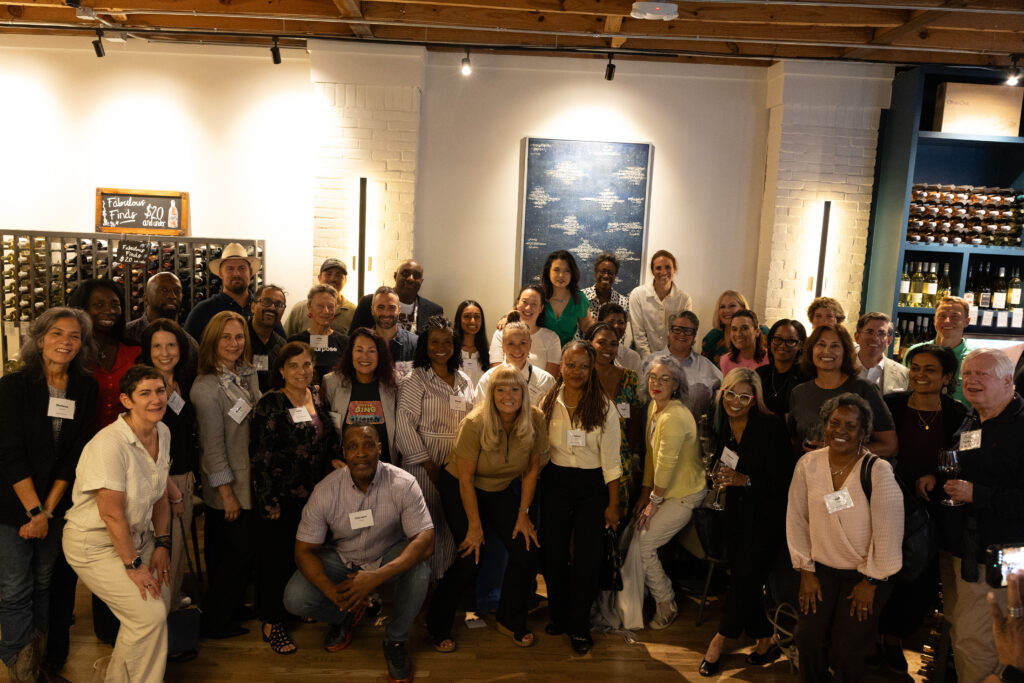
Partners, volunteers, speaker alumni, collaborators and members of the TEDxAtlanta community gathered for an invitation-only toast to the 2026 season, raising a glass to the ideas, conversations and connections that will shape this year’s conference.
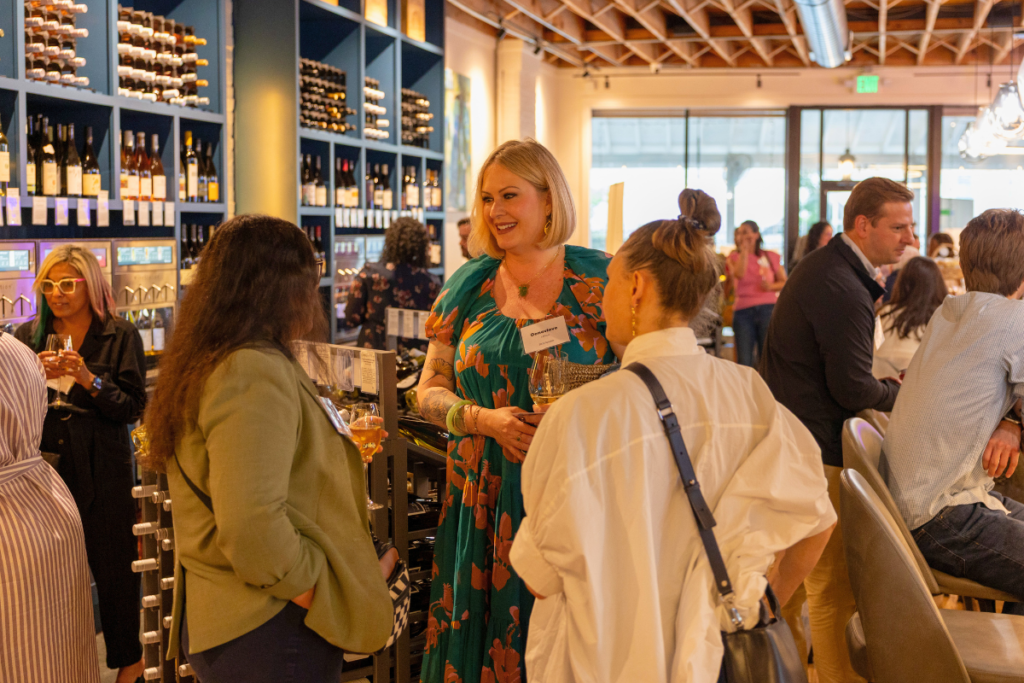
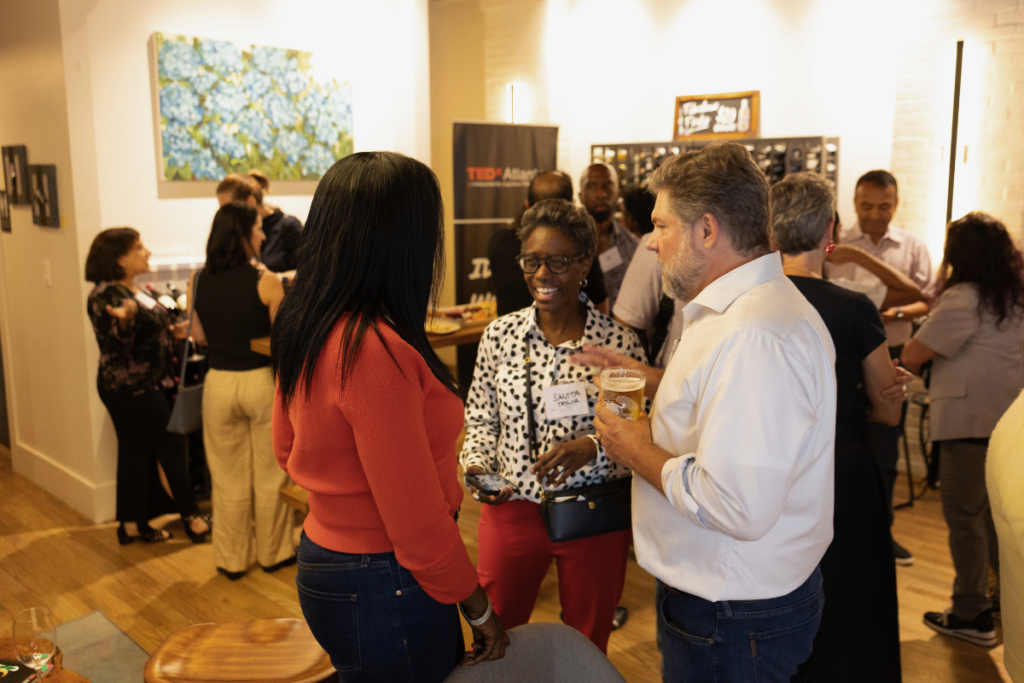
For two hours, the wine shop buzzed with introductions, reunions and the kind of conversations that seem to happen only when people from very different worlds find themselves around the same table.
TEDxAtlanta speaker alumni compared notes with first-time speakers preparing for their debut. Community partners connected with volunteers. Familiar faces caught up while new relationships formed over light bites and glasses of wine.
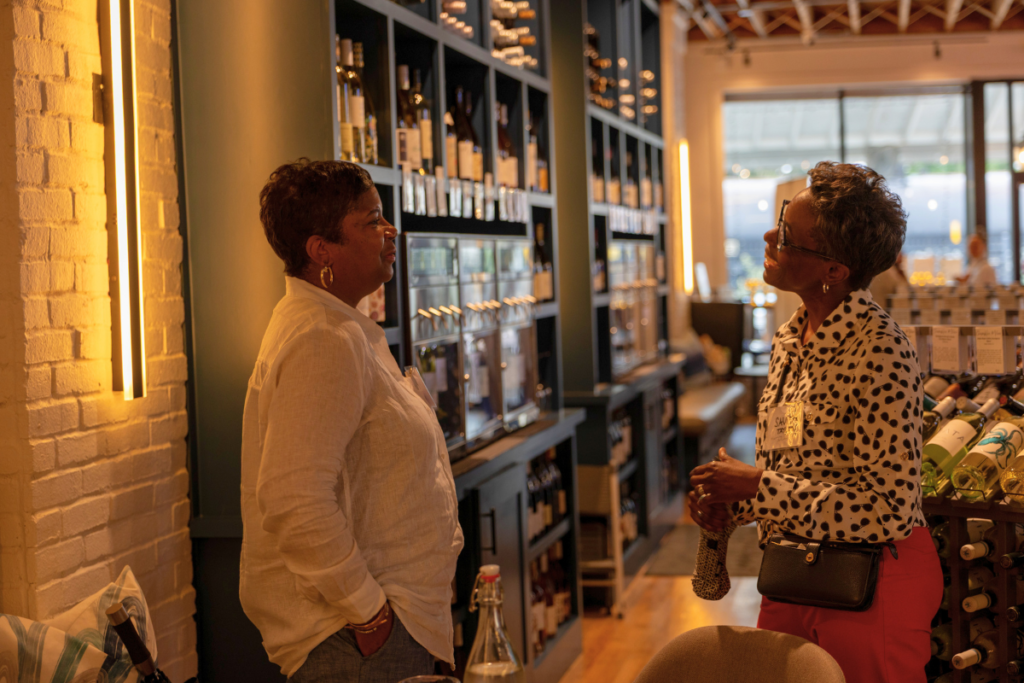
The evening’s unofficial theme was anticipation.
As guests settled in, TEDxAtlanta Licensee Jacqui Chew gathered the room for a conversation that bridged TEDxAtlanta’s past and future. Speaker alumni shared lessons from their own journeys to the red circle, offering practical advice and encouragement to the 2026 speaker class.
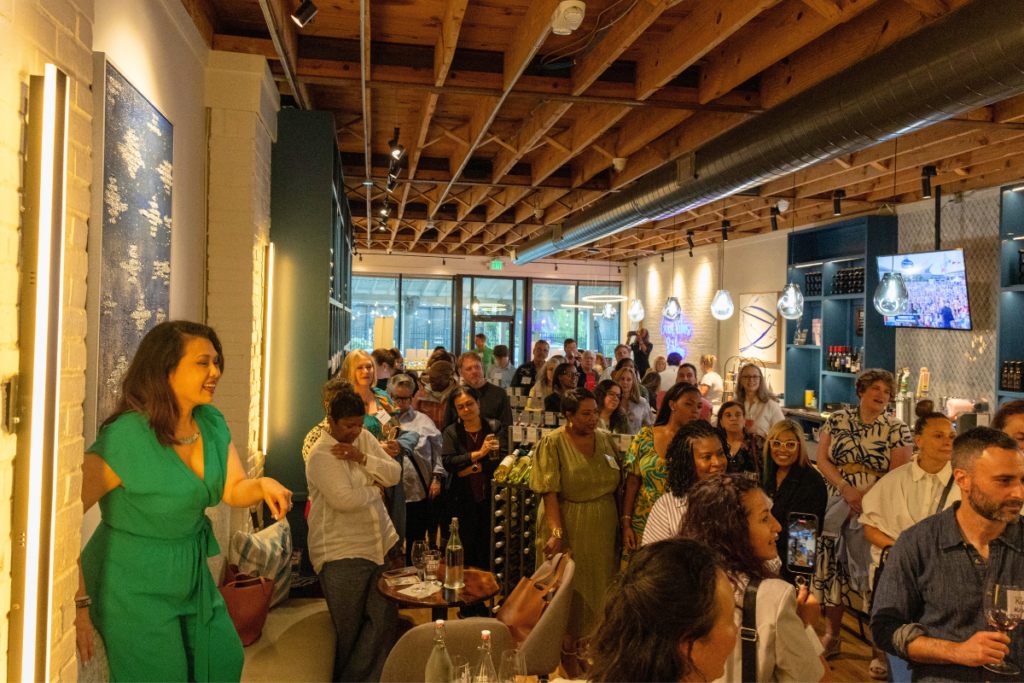
The message was consistent: Practice relentlessly. Trust the process. Use every resource available. And when the day arrives, let go of memorization and focus on connection.
Then came a moment reserved for those who will soon be taking the stage.
One by one, members of the 2026 TEDxAtlanta and TEDxAtlanta Youth speaker cohorts shared brief glimpses of the ideas they’ll bring to the stage this October.
The reaction was immediate.
Heads nodded. Phones came out to capture notes. Conversations continued long after the introductions ended as guests sought out speakers whose ideas had caught their attention.
If the evening offered any preview of what’s ahead, it’s that TEDxAtlanta 2026 is already generating the kind of energy that happens when compelling ideas meet a community eager to engage with them.
October still feels months away.
After this night, it also feels a little closer.
Atlanta has always been a city of reinvention.
It’s a place shaped by resilience and the belief that what exists today does not have to define what comes next. Across business, culture, technology, civic life, education and the arts, Atlanta continues to show what is possible when people are willing to challenge convention and build something stronger.
That spirit is at the heart of TEDxAtlanta 2026.
This year’s theme, Bold. Brave. Unbreakable, celebrates the ideas and people helping us imagine stronger futures in a rapidly changing world.
To be bold is to see possibility before everyone else does. To be brave is to keep moving when the path is uncertain. To be unbreakable is not to be untouched by challenge–it’s to keep building anyway.
Bold speaks to the power of imagination.
Bold ideas challenge what people assume is fixed. They question old systems and invite us to see a different future before it fully exists. In a city known for reinvention, boldness is part of Atlanta’s DNA. It shows up in entrepreneurs building new models, artists reshaping culture, scientists asking better questions, organizers strengthening communities and leaders willing to do things differently.
Brave speaks to the courage required to act.
It’s one thing to imagine a stronger future. It’s another to move toward it. Brave ideas often ask us to confront complexity, uncertainty or disagreement. They ask us to speak more honestly and take responsibility for what comes next. Bravery is not the absence of fear. It is the decision to keep showing up with purpose, even when the work is difficult.
Unbreakable speaks to the strength that comes from adaptation.
To be unbreakable is not to be untouched by change, pressure or loss. It is to keep learning and building anyway. It is the resilience of people who turn experience into wisdom. It’s the strength of communities that become stronger through connection. It’s the power of ideas that continue to evolve because they are rooted in something real.
Together, these words point to the kind of future TEDxAtlanta exists to explore—one shaped by courage, creativity and connection.
TEDxAtlanta is designed to be more than a conference. It is a chance to pause.
In the middle of full calendars, constant headlines and the pressure to keep up, TEDxAtlanta offers something different: a place to take a beat, find inspiration, make connections and learn something new.
Our annual conference features the famous TEDx Talk format, complemented by Explore Sessions that invite curiosity and spark discussion. Together, these experiences create the conditions for deeper connection and meaningful action.
It’s part respite and part invitation to rediscover what is possible.
The world is changing quickly. Technology is reshaping how we work and live. Communities are asking harder questions about equity, opportunity and belonging. Climate, health, education, creativity and civic life all demand new thinking.
In moments like this, it can be tempting to move faster without pausing to think more deeply. TEDxAtlanta creates space for the opposite.
It’s a place to step away from the noise. To listen to people outside your industry, your discipline or your usual circle. To find inspiration in unexpected places. To make connections that sharpen your thinking and deepen your sense of what is possible.
That is why this year’s theme matters. Bold. Brave. Unbreakable. is not only about individual grit. It’s about the ideas, relationships, and communities that help us meet complexity with imagination rather than resignation.
This year also marks an exciting expansion: the addition of TEDxAtlanta Youth.
Immediately following the mainstage conference, TEDxAtlanta Youth will feature changemakers ages 16 to 23 whose ideas, questions and lived experiences deserve the stage.
Their presence matters. Young people are inheriting a world with much to build on and much to repair. They are coming of age in a time of possibility, uncertainty and pressure. Their ideas are not simply “next-generation” ideas. They are ideas for right now, shaped by urgency and a willingness to imagine futures that work better.
By bringing TEDxAtlanta Youth into this year’s conference experience, TEDxAtlanta is making room for bold questions and brave voices across generations.
TEDxAtlanta 2026 is an invitation to pause and consider what this moment asks of us.
What does it mean to be bold when the future feels uncertain? What does bravery look like when change is no longer abstract? And what makes people, communities and ideas unbreakable when the world keeps shifting?
There is no single answer. That’s the point.
Across the conference, we’ll hear from people whose ideas challenge assumptions and open new ways of seeing what is possible. We will make room for curiosity, conversation and connection. We will gather not to escape the complexity of the world, but to meet it with more imagination.
So come ready to take a beat.
Come ready to learn something new.
Come ready to leave with a question worth holding onto:
What makes you unbreakable?
Be the first to know when registration opens for TEDxAtlanta 2026. Sign up for updates at TEDxAtlanta.com and have them delivered directly to your inbox.
“If you’re old enough to love, you’re old enough to grieve.”
That was one of the lines that landed at TEDxAtlanta Salon: Atlanta Impact Night, a night built around a simple idea: make it easier for people to help solving problems affecting their neighbors.
TEDxAtlanta Licensee Jacqui Chew framed it plainly at the start: too often, the gap between awareness and action is where good intentions go to die. This Salon was built to close that gap.
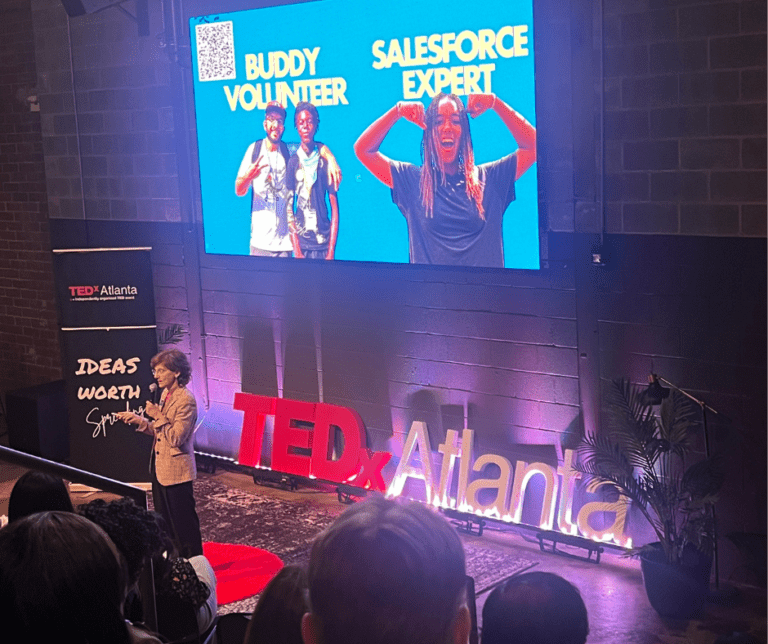
The format helped. It was part TEDx-style storytelling, part startup pitch and part skills-based volunteer matchmaking. Five nonprofit leaders took the stage for short talks, then moved into roundtable rotations where participants called “catalysts” could ask questions, scan QR codes and connect with specific volunteer roles created for that night. It was less about whether people wanted to help and more of where they could finally see themselves helping.
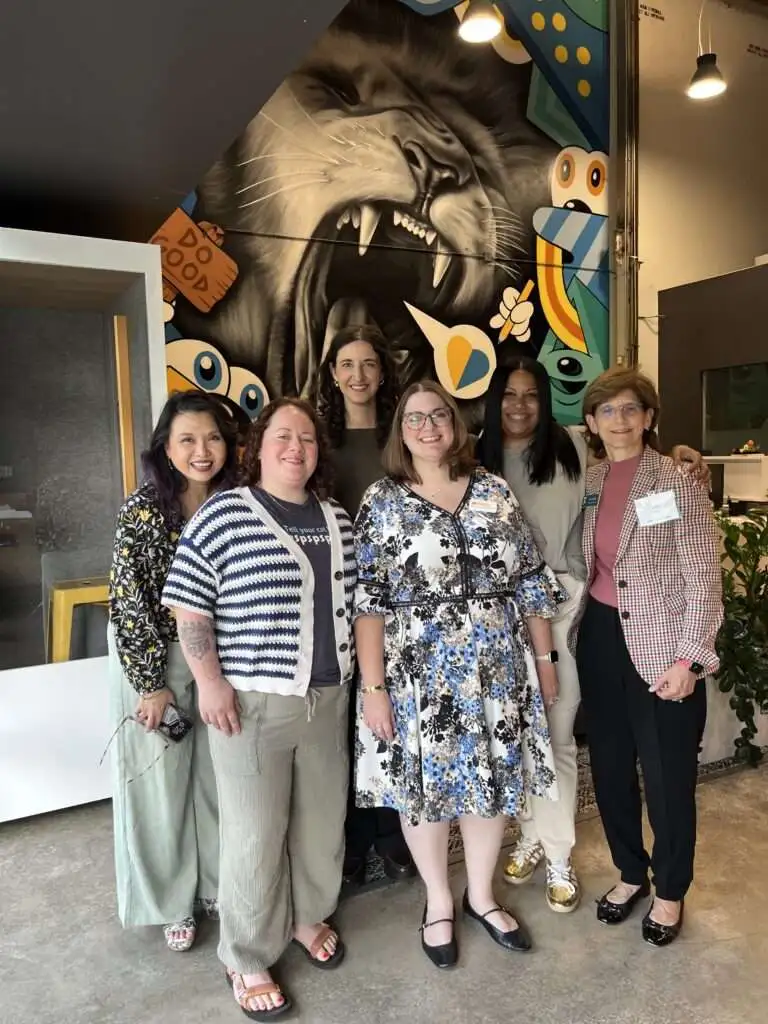
That was the difference. No vague call to “get involved.” The asks were specific. Kate’s Club needed buddy volunteers and Salesforce help. Welcome Co-op needed outreach support and stronger social media design templates. We Create Tech needed people who could host student experiences, lead hands-on workshops or help tell its story at scale. LifeLine Animal Project was looking for “pawparazzi” — volunteers who could photograph pets and write bios that might help them get adopted. Atlanta Community Food Bank framed volunteering in a way that felt refreshingly practical: if you like being behind the scenes, there is a place for you. If you want to work directly with people, there is a place for you there, too.
What made the evening work, though, wasn’t just the structure. It was the people.
There were moments all night that made the asks feel tangible. A Food Bank representative talking about helping someone figure out how to use donated duck fat. A description of gas prices making it harder for caregivers to get kids to Kate’s Club, which led the organization to bring the clubhouse into communities instead. A We Create Tech story about a student whose curiosity about how technology worked carried him from the classroom to a career in New York right out of college. A LifeLine Animal Project story about a dog named Fruit Loop, who always looked scared in the kennel until someone took a beautiful photo that got him adopted.
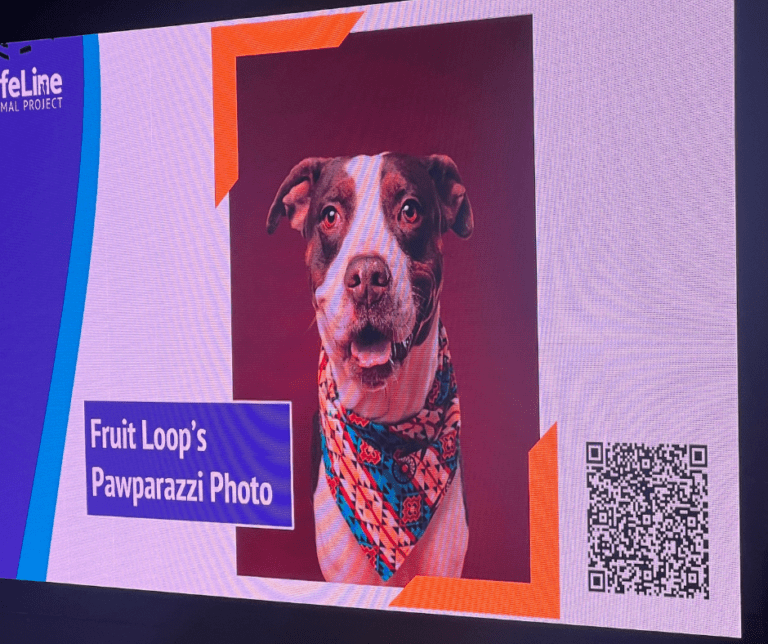
The energy in the room was not imagined. This TEDxAtlanta Salon welcomed more than 70 participants, and all dozen of so volunteer roles had multiple applicants before the evening was over.
In talking with Lisa Aman of Kate’s Club and Emily Laney of Welcome Co-op, what struck me was how warm they were. Not rehearsed. Just deeply present. The kind of people you want to keep talking to because their conviction felt lived in, not packaged. You could feel how much they cared, and not in a vague way. In a specific, practical, sleeves-rolled-up way. The same was true of the other leaders that night. They were compassionate, yes, but also clear-eyed. It left me feeling hopeful about the kind of people out there doing this work—and the kind of people still willing to show up for it.
Lisa spoke about grief with clarity and without sentimentality. In Georgia, she said, one in 10 children will grieve the death of a parent or sibling by age 18. “We don’t try to fix grief,” she said. “We try to make sure that no child carries it alone.” Kate’s Club put out a call for buddy volunteers who can show up consistently for children and families, and for a Salesforce support that can help scale its operations and reach to serve more kids. It was one of the clearest examples of the night’s larger point: some of the most meaningful forms of help are deeply human, and some are operational. Both matter.
Emily was equally candid about the pressure Welcome Co-op is under. It has been a hard year, she said. Needs are growing. Families already here need support while safety nets thin out. And still, what stayed with me from talking with her was not just the strain, but the energy she brought into the room. Once the roundtables began, she could feel people beginning to place themselves in the work. There were attendees, she said, who essentially had the same realization: wait, I know exactly what I can do to help.
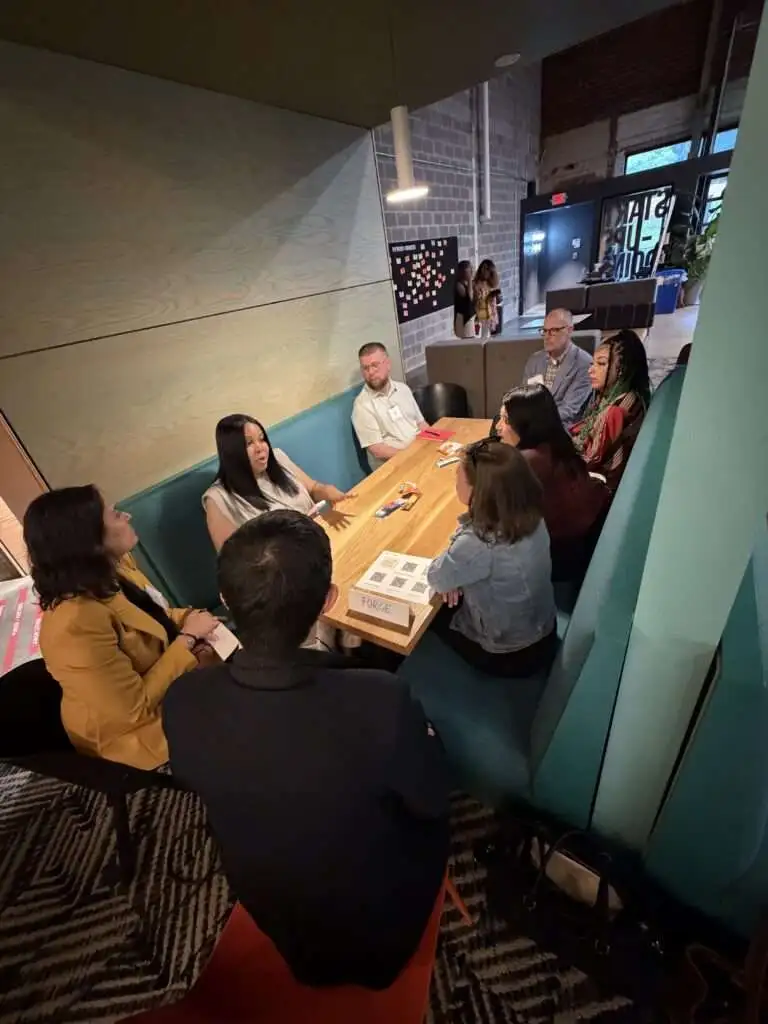
You could see that happening at the tables during the roundtable discussion segment of the evening. People leaned forward. Questions got more specific. Phones came out to scan QR codes. Someone offered grief-informed volunteer support. Someone else connected a Georgia Tech healthcare translation resource to the needs Welcome Co-op had described.
One attendee, Andrea Jordan, arrived at her first TEDxAtlanta event not quite sure what to expect. By the end of the night, she was talking about volunteering and praising the format for making it easy to connect with several organizations in one evening.
Even after the event officially ended, no one seemed in a rush to leave. People stayed in the room, talking in small groups, asking questions and making connections. It was a simple but telling sign that the night had done what it was meant to do.
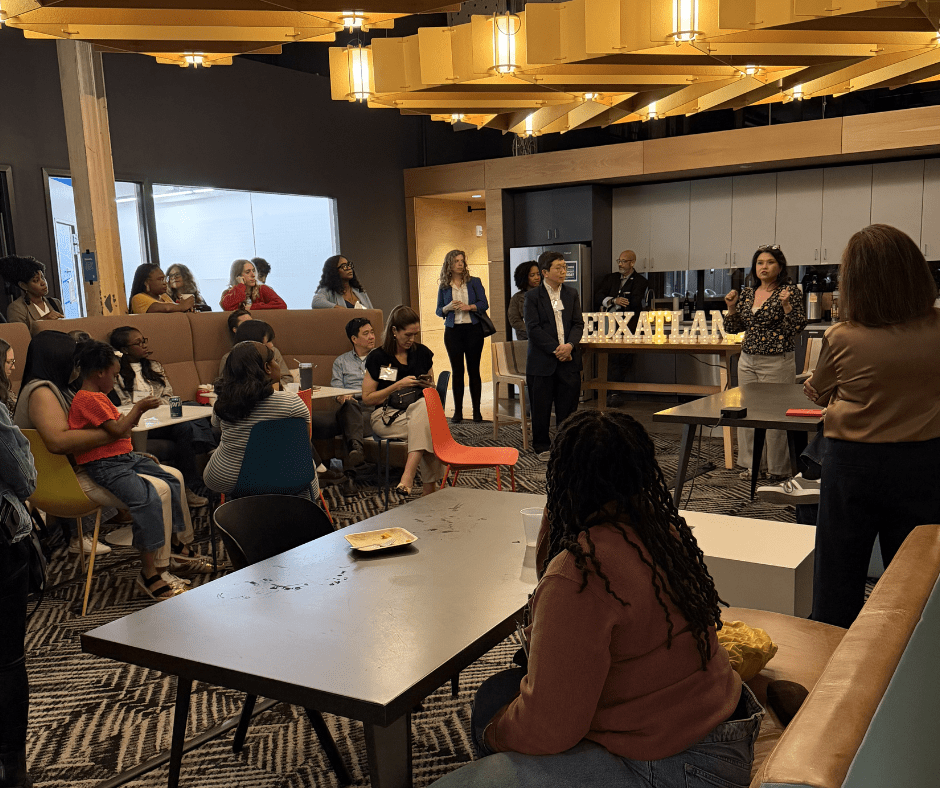
It would be easy to say this Salon attracted a room full of compassionate people, and it did. The format made it possible for participants to go beyond compassion to possibility and action.
That matters in the sprawling nature of metro Atlanta. Where transportation logistics often gets in the way of good intentions. It matters for nonprofit leaders who need skilled talent as much as they need awareness. And it matters for anyone who has ever thought, ‘I should get involved in this,’ only to let the thought pass.
For one evening in Atlanta, that distance between intention and action got shorter. The question was no longer whether to help. It was where to begin.
In uncertain times, the urge to “do something” is strong, but the path to meaningful action isn’t always clear. We see the challenges facing our city and want to help, but where do we start? How do we move beyond a headline and into a real solution?
That’s why we’re proud to announce our first Salon of the season: Ideas Into Action: Atlanta Impact Night.
Beyond the “Idea”
On Tuesday, April 21, we are gathering at Plywood Place in the Historic West End for an evening designed to turn concern into tangible commitment.
This isn’t your typical networking mixer or charity gala. This is a curated experience for those who want to build a better Atlanta through the power of their skills, their talent and their time.
The Format: 5 Minutes. 6 Opportunities.
We have invited leaders from six innovative Atlanta-area nonprofits to take the stage. The rules are simple:
Whether it’s a need for marketing assistance, operational expertise or plain, old-fashioned elbow grease, these organizations are looking for partners, not just donors.
A Look at our Featured Partners
We are honored to be joined by a diverse group of changemakers, including:
Join Us
Come for the inspiration, stay for the connection. We’ll have lite bites and zero-proof beverages served throughout the night as you meet like-minded Atlantans ready to move the needle.
Are you ready to turn your curiosity into commitment? Register now.
International Women’s Day is a good excuse to pause and remember the women whose thinking has changed the way we see things.
Here are three talks that have done that for us.
Reshma Saujani starts with the story of running for Congress and getting absolutely humbled. She raised a ton of money, got some big attention, then walked away with 19 percent of the vote. Her takeaway isn’t “failure is good.” It’s more specific than that: it was the first time she did something without trying to be perfect first.
Then she connects it to something you’ve probably seen in real life. Boys jump off the monkey bars. Girls get told to be careful, get it right, don’t mess up.
She even shares what this looks like in a coding class: girls will write code, delete it and leave a blank screen because showing “almost” feels worse than showing nothing.
It’s one of those talks that quietly reframes things. You start noticing where you’ve hesitated, or where you’ve expected perfection from yourself before taking a risk.
Chimamanda Ngozi Adichie starts with a story about being called a feminist at fourteen—and not even knowing what the word meant.
From there, she moves through small, everyday moments: losing the role of class monitor because she wasn’t a boy. Tipping a parking attendant who then thanked the man standing next to her. Wearing an “ugly, serious suit” so she’d be taken seriously.
None of the examples are dramatic. That’s the point. They’re small, everyday exchanges that add up.
By the end, her definition of feminist is simple and disarming: a person who says there’s a problem with gender as it is—and we should do better.
Sarah Kay starts with a poem for a future daughter — “instead of Mom, she’s going to call me Point B.” It’s clever and warm, but it doesn’t stay there.
The talk moves between performance and reflection. It’s about voice. About not pretending to be cool and unfazed. About saying something out loud and realizing someone is listening.
It’s one of those talks that makes you want to write something down after.
Sometimes the best way to mark the day is to listen.
Happy International Women’s Day.
Valentine’s Day is often associated with roses and chocolates, but what if we used it as an excuse to think about love, too? These three TED Talks take us beyond the heart emojis to questions that make love not just sweeter but wiser.
Would you take a pill that made you love everyone? (TED podcast)
Imagine a philosophical thought experiment: a pill that instantly makes you capable of loving every person you meet. Would you take it? In Would you take a pill that made you love everyone?, Notre Dame philosopher Meghan Sullivan takes this provocative question and turns it into a spotlight on what love really is and why it’s harder (and more rewarding) than any quick fix. Drawing on Aristotle, the Gospels, and modern psychology, she challenges us to consider love not as an emotion we “fall into,” but a deep ethical practice that shapes the good life itself.
Think of this talk as your Valentine’s philosophy quest: what if expanding our capacity to love isn’t just for soulmates, but for neighbors, strangers, and even ourselves?
Love isn’t just soft feelings and romantic walks. For bestselling author and storyteller Kelly Corrigan, love is bravery. She brings us into the messy, beautiful world of family love and everyday courage in To Love Is to Be Brave. With her wry humor and emotional clarity, Corrigan shows that loving someone means stepping close to their wounds, asking the hard questions, and staying present through uncertainty. Real love, she suggests, is about showing up anyway.
This is a great Valentine’s watch for anyone who’s ever sat beside someone through grief, laughed through an awkward dinner, or said “Tell me more” and understood how powerful that simple gesture can be.
“Is this person the one?” — we’ve all asked it. But psychiatrist and relationship expert George Blair-West says that’s the wrong question. In this TEDxBrisbane talk, he reframes what really matters in romantic relationships: not a fairy-tale idea of “destiny,” but practical questions about acceptance, commitment, and mutual growth before you make that leap together.
For Valentine’s Day, this talk offers a grounded counterpoint to the butterflies-in-your-stomach narrative. Love turns out to be less about finding a mythical single soulmate and more about choosing — consciously and compassionately — someone you want to grow with, year after year.
On this day of hearts and chocolates, why not give yourself something a little deeper: perspectives on love that are thoughtful, messy, and deeply human. Each of these talks, in its own way, reminds us that love isn’t just something that happens to us; it’s something we do.
Happy Valentine’s Day. May your curiosity be as full as your heart.
Education shapes lives in lasting ways. It influences opportunities, stability, and the ability to imagine a future beyond immediate circumstances. Yet for millions of young people around the world, access to quality education remains uncertain or out of reach.
The United Nations established January 24 as International Day of Education to recognize education’s role in peace and sustainable development. For 2026, UNESCO’s focus is especially timely: young people as partners in shaping modern, inclusive education systems.
Young people make up more than half of the global population. They are also the group most directly affected by how education works—or fails. Persistent barriers, from poverty and inequality to displacement and limited access to schooling, continue to shape what learning looks like and who benefits from it.
On International Day of Education, the challenge is not simply to value education, but to reconsider how it is designed and who gets a voice in that process.
That’s where the following TED Talks come in. Over the years, speakers have examined what supports learning, what undermines it and what might help education systems respond more effectively to a changing world.
Motivation is often framed as something students either possess or lack. Eliseo Fernández Barrionuevo suggests a different way of looking at it.
Drawing on research and experience across classrooms and countries, he explains how motivation can transfer from one context to another. Interests that students already care deeply about — sports, games, creative pursuits — can become entry points for learning when educators take the time to connect them to the curriculum.
Rather than asking why students seem disengaged, his work invites educators to notice where energy already exists. When learning feels relevant, motivation follows.
Rita Pierson’s talk centers on a truth that is easy to overlook in policy discussions: students learn best when they feel seen.
After decades in education, she argues that no amount of reform can replace the impact of human connection. One line captures her message plainly: kids don’t learn from people they don’t like.
Pierson speaks about teaching as relational work—apologizing when mistakes are made, recognizing progress even when it’s small, and refusing to write off the students who struggle most.
Her point isn’t about being nice for the sake of it. It’s about what works. Students are more willing to try, to listen and to stay when they feel a genuine connection to the adult in the room.
It’s hard to talk about education in 2026 without talking about artificial intelligence.
Sal Khan addresses common fears about AI in the classroom, then reframes the conversation. Used thoughtfully, he argues, AI could help address one of education’s long-standing challenges: providing personalized support at scale.
By acting as a tutor for students and an assistant for teachers, AI has the potential to expand access to feedback, guidance and practice — without replacing human educators. Khan emphasizes that design choices matter. The goal is not automation for its own sake, but tools that support learning rather than shortcut it.
International Day of Education is a moment to pause and reflect.
Education is a human right, but it is also a system shaped by decisions—around leadership, technology and whose perspectives are valued.
There isn’t one fix here. But there is a common thread: attention to how students experience learning, and who gets included when decisions are made.
Every December, the same promises resurface. We tell ourselves that next year will be different, that this time we’ll follow through.
Most of us already know how that story ends. By February, the promise has slipped away—not through lack of willpower, but because it was never built to hold on its own.
In his TEDxAtlanta talk, Why You Keep Breaking Promises to Yourself (and How to Stop), Walt Brown offers an insight that lands especially hard this time of year: promises don’t work well in isolation.
Walt was a self-professed serial promise breaker. Diets, health goals, and commitments tied to serious moments in his life—all made with good intentions, all eventually broken.
Over time, those broken promises did more than slow progress. They quietly eroded his trust in himself.
What helped him make sense of that wasn’t a productivity system or a mindset shift, but philosophy. Drawing on the work of Yale professor Stephen Darwall, Walt points to a simple idea: a promise only carries real force when it’s made between people and explicitly accepted.A promise made to yourself doesn’t quite meet that standard. There’s no second person to receive it, no shared moment of acknowledgment and no relationship holding it in place.
Seen this way, the problem isn’t discipline; it’s design. Promises weren’t built to work alone.
The turning point in Walt’s story didn’t come from stricter habits or renewed determination. It came when someone else was involved.
When his wife committed to supporting him, the effort became shared. Accountability stopped feeling abstract, and progress was no longer driven by self-imposed pressure. Trust—mutual and visible—did the work instead.
That same dynamic shows up in Walt’s work with organizations. Companies make promises constantly, whether through job descriptions, values statements or the way meetings are run. When those promises are vague or quietly broken, trust thins out. When they’re clear and consistently honored, something steadier takes hold.
Teams perform better not because culture slogans suddenly work, but because expectations are actually upheld.
Atlanta is a city shaped by connection. Progress happens because people show up for one another across neighborhoods, networks and communities.
Walt’s talk suggests that personal change works much the same way.
So instead of asking, What promise will I finally keep this year? it may be more useful to ask, Who needs to be part of it?
As the New Year approaches, that shift matters. It’s not about more willpower or a better resolution. It’s about recognizing that promises—like communities—tend to hold when they’re shared.
Every year, millions of people tune in to the Macy’s Thanksgiving Day Parade. It’s one of the biggest communal spectacles in the country—a reminder that art and play have the power to bring strangers together, even if only for a moment.
The Macy’s Parade is a national tradition, but the impulse behind it—sharing joy in public space—isn’t tied to a holiday. Atlanta reflects that same instinct through a year-round parade culture built by the people who live here.
One of the leaders shaping that culture is TEDxAtlanta 2025 speaker and parade artist Chantelle Rytter. Her talk, “How parades can build community,” is a reminder that joy is public and that neighborhoods become stronger when we step outside and build something together.
This talk was also selected as a TEDx Editor’s Pick, a distinction given to roughly 500 talks out of more than 4,000+ TEDx events and tens of thousands of talks worldwide.
In an age where loneliness is on the rise, Chantelle makes the case that parades offer far more than entertainment—they’re a civic wellness program.
She describes illuminated creatures gliding through the Atlanta night, thousands of handmade lanterns drifting along the BeltLine, and strangers cheering for people they’ve never met. In her words, “Parades create a space above and away from the fray where we come together simply to delight one another.”
And something shifts in that space. For an hour, the city becomes a place of possibility; a reminder that playfulness isn’t frivolous at all, but something that restores us.
Chantelle spent a decade in New Orleans, where parading is woven into the rhythm of the city. When she moved to Atlanta, she immediately felt the absence of that ritual. Not the spectacle, but the shared joy, the sense of belonging that happens when people gather in public to create something together.
So she decided to build it.
What started as longing became one of Atlanta’s most beloved cultural traditions: the Atlanta BeltLine Lantern Parade. Over the past 15 years, her work has invited more than half a million people into the streets to create, march, dance, and witness one another in a way that feels both ancient and entirely new.
Atlanta traffic and the daily headlines may test our optimism, but parade nights show something different—the version of ourselves that’s kind, creative, and willing to show up for each other.
You see it in the way someone lights up when a cheering crowd calls out their lantern or costume. You see it when newcomers realize they don’t need to be “born into” parade culture to claim it; it grows simply because people build it together.
As the Macy’s Thanksgiving Day Parade captures national attention, it’s a good prompt to look at what makes parade culture meaningful. These gatherings don’t rely on tradition alone—they take shape because people commit time and creativity to them.
Parades connect people to people, and people to their place. They’re open invitations to bring your imagination, your effort, and your presence to create a moment that belongs to everyone.
In a season defined by gratitude and gathering, Chantelle’s talk is a reminder that community doesn’t happen on its own.
We create it—lantern by lantern and moment by moment.
Behind every poverty statistic is a lived reality. Poverty isn’t only about how much someone earns each day — it’s about dignity, rights, and the chance to live without fear that one crisis will undo years of progress. The latest data from the UN is sobering:
More than 690 million people live in extreme income poverty on less than $2.15 a day, while nearly half the world lives below $6.85 a day—just one shock away from hardship.
Climate shocks hit people experiencing poverty hardest: those contributing least to emissions bear the steepest income losses.
Conflict deepens poverty: fragile and unstable settings account for a growing share of people living in extreme poverty.
On this International Day for the Eradication of Poverty (October 17), these realities remind us that poverty isn’t just about income — it’s about systems, resilience, and the voices we choose to listen to.
That’s where TED Talks come in. Across the years, speakers have challenged our assumptions about poverty and inequality. They’ve shared evidence, exposed traps, offered bold solutions, and spoken from lived experience.
To Eradicate Poverty, Listen to the People Who’ve Experienced It — Andrea Pickett (TEDxPortsmouth)
Andrea Pickett doesn’t speak about poverty from a distance. She speaks about it as someone who lived it—a single mom navigating broken systems, confusing applications, and cars that wouldn’t start. In her talk, she makes the case that people experiencing poverty must have a seat at the table when policies are designed.
Her point is simple but powerful: if we can see the humanity in a firefighter who falls into homelessness, why can’t we extend that same humanity to everyone? Pickett reminds us that dignity starts with listening.
How economic inequality harms societies — Richard Wilkinson (TEDGlobal)
More than a decade ago, Richard Wilkinson laid out the data that inequality doesn’t just affect people experiencing poverty—it ripples through all of society. In countries with wider income gaps, health outcomes worsen, violence increases, trust erodes, and social mobility stalls.
What made his talk groundbreaking is how clearly the graphs told the story: wealthier nations weren’t necessarily healthier or happier. What mattered was how evenly opportunity was shared. Wilkinson’s work gives us the evidence behind what many instinctively feel: inequality corrodes the bonds that hold societies together.
Why is it so hard to escape poverty? — Ann-Helén Bay (TED-Ed)
Even when support exists, it can come with strings attached. Ann-Helén Bay’s animated talk breaks down the “welfare trap,” which is the harsh reality that taking a job or a small raise can mean losing the very benefits that keep food on the table or a roof overhead.
This means people can be punished for working. It’s not laziness; it’s math. Bay’s talk doesn’t just highlight the problem; it points to solutions: phasing out benefits more gradually, simplifying programs, and exploring universal approaches that reduce the fear of losing everything with one small step forward.
To End Extreme Poverty, Give Cash—Not Advice — Rory Stewart (TED)
Former UK politician and development worker Rory Stewart offers a radical but deeply evidence-based solution: just give people cash: no strings, no complicated programs, no costly overhead.
His talk is full of examples. A $40,000 sanitation project delivered only a couple of latrines and some plastic buckets. The same money, given directly, could have transformed twenty times as many schools. And when NGOs in Rwanda started handing families lump-sum payments, villages flourished: homes improved, kids went to school, businesses started, health insurance was purchased.
The lesson? People know what they need. Trust them. As Stewart says, unconditional cash isn’t just more efficient — it’s more respectful. It recognizes dignity as the foundation for progress.
On this International Day for the Eradication of Poverty, the most important takeaway is this: poverty is not inevitable. It’s shaped by choices in policy, in community, and in how we see one another.