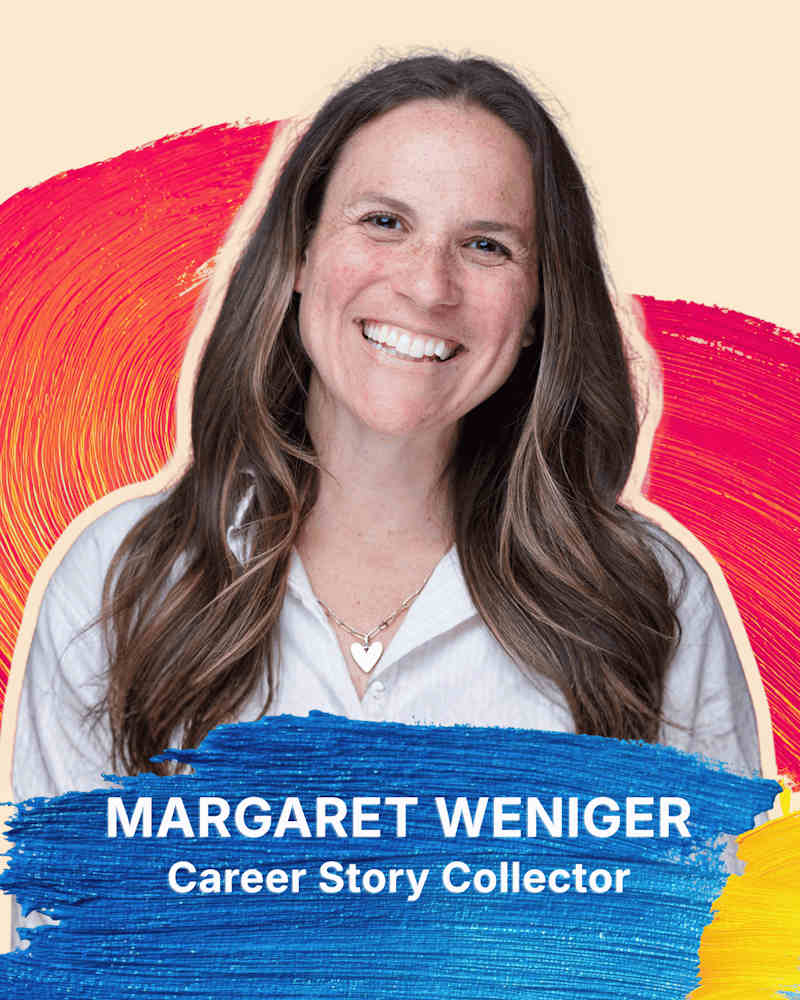
Growing up in Singapore, I learned about slavery as part of American history.
I learned about the transatlantic slave trade, about the Civil War, about Abraham Lincoln and the Emancipation Proclamation.
And yes, I aced the history tests.
But didn’t learn about Juneteenth.
In fact, I didn’t encounter Juneteenth until the late 2010s, after I had moved to the United States and become deeply involved in the TED and TEDx communities.
Looking back, I can’t believe how I could I know so much about slavery and emancipation, and yet not know about the day that commemorates the moment when more than 250,000 enslaved people in Texas finally learned they were free!
The answer, I think, is that I knew the history, but I didn’t yet understand the larger story.
School taught slavery as an event in time. It didn’t teach us freedom is an ongoing pursuit.
That understanding came through years of listening.
As a TEDx organizer, I have had the privilege of hearing thousands of speakers and their ideas. Along the way, I have come to appreciate that freedom is not a fixed concept. Freedom is experienced differently depending on where you live, who you are, and what risks you face when you speak, worship, organize, create, or simply exist.
One of the earliest lessons came in 2011 on a shuttle ride from Palm Springs to TED.
I found myself seated next to a woman from Egypt. We spent much of the ride talking about her faith, her family, and what it meant for her to wear a hijab. At the time, I carried assumptions that many Westerners hold. I viewed the hijab primarily as a symbol of female oppression.
But as she shared her experience, it was like the sun climbing the sky and shedding light on a previously shadowed valley.
The hijab she described was not something imposed upon her. It was a personal expression of faith, identity and conviction. Whether I would make the same choice was not the point. For her, the ability to make that choice was itself an expression of freedom.
That conversation didn’t erase the reality that some women around the world are forced into practices they would not choose. But it taught me something equally important: freedom becomes harder to understand when we assume everyone experiences it through our own lens.
The more I listened to people from different countries, the more nuanced my understanding became.
And the more complex it became, the more honest it became.
Several TED Talks helped shape that journey.
One was by Bryan Stevenson, whose talk “We Need to Talk About an Injustice” challenged me to think about how systems can perpetuate inequality long after society declares itself equal.
Another was Chimamanda Ngozi Adichie’s “The Danger of a Single Story,” which explores how incomplete narratives shape our understanding of people and communities. The talk remains one of the clearest explanations of why listening matters.
I was also influenced by Mellody Hobson’s “Color Blind or Color Brave?” which argues that progress requires confronting uncomfortable realities rather than pretending differences do not exist. This one was particularly poignant growing up in a country that proclaims itself a meritocracy but is rife with racial stereotypes and prejudices that shape its social, political and economic institutions.
And I found myself returning repeatedly to the work of Isabel Wilkerson, whose exploration of caste and hierarchy helped me understand how systems can continue influencing outcomes long after the original structures appear to have disappeared.
These talks deepened my understanding of race and race in America.
They also helped me understand something broader: freedom is not just about what laws permit; freedom is also about what people can safely do.
As my involvement with TEDx grew, I became friends with organizers around the world. I discovered that the freedoms I had come to take for granted in America were not universally shared.
Before 2025, many of us in the United States operated with an assumption that we could curate ideas freely. We could invite speakers who challenged institutions, questioned leaders, exposed systemic failures, or criticized prevailing wisdom. Those conversations were often uncomfortable, but they were generally possible.
Not everyone had that luxury.
Friends and fellow organizers in places like China and Myanmar often navigated a very different reality. They had to think carefully about which ideas could be presented publicly, how certain topics were framed and what consequences speakers or organizers might face. Their work required a level of caution that many of us in the United States never had to consider.
The contrast was illuminating. What I viewed as normal since my arrival in this country was, in fact, a privilege: the freedom to question authority, to challenge the status quo, to share an unpopular idea.
Heck, the freedom just to gather around ideas at all.
These are freedoms that many people throughout history, and many people today, have had to fight to obtain.
That realization brought me back to Juneteenth.
When General Gordon Granger arrived in Galveston, Texas, on June 19, 1865, and announced that enslaved people were free, he was delivering news that should have reached them years earlier.
The delay itself tells an important story. A right can exist on paper before it exists in reality and a promise can be made before it is fulfilled.
A society can declare freedom before everyone experiences it.
That lesson extends far beyond the history of slavery in America.
Every nation has communities that continue to seek fuller participation, greater opportunity and equal recognition. The barriers differ. The histories differ. The political systems differ.
But the work remains remarkably similar.
Juneteenth reminds us that progress is not self-executing, and not, by any means, assured.
Progress requires vigilance, empathy AND a willingness to listen to experiences that aren’t our own.
As an immigrant, I arrived in America with knowledge of slavery as a historical fact. What I gained through TED and TEDx was a deeper understanding of freedom as a living, unfinished project.
Juneteenth is not simply a celebration of the end of slavery. It is a reminder that freedom must continually be defended, expanded and made real for more people.
Instead, I find myself asking better questions:
Who gets to speak?
Who gets to participate?
Who gets to belong?
Who gets to challenge power?
And who is still waiting to experience freedoms that others assume are already theirs?
Juneteenth invites us to keep asking those questions.
Not just about the past. But about the future we are creating together.
Education shapes lives in lasting ways. It influences opportunities, stability, and the ability to imagine a future beyond immediate circumstances. Yet for millions of young people around the world, access to quality education remains uncertain or out of reach.
The United Nations established January 24 as International Day of Education to recognize education’s role in peace and sustainable development. For 2026, UNESCO’s focus is especially timely: young people as partners in shaping modern, inclusive education systems.
Young people make up more than half of the global population. They are also the group most directly affected by how education works—or fails. Persistent barriers, from poverty and inequality to displacement and limited access to schooling, continue to shape what learning looks like and who benefits from it.
On International Day of Education, the challenge is not simply to value education, but to reconsider how it is designed and who gets a voice in that process.
That’s where the following TED Talks come in. Over the years, speakers have examined what supports learning, what undermines it and what might help education systems respond more effectively to a changing world.
Motivation is often framed as something students either possess or lack. Eliseo Fernández Barrionuevo suggests a different way of looking at it.
Drawing on research and experience across classrooms and countries, he explains how motivation can transfer from one context to another. Interests that students already care deeply about — sports, games, creative pursuits — can become entry points for learning when educators take the time to connect them to the curriculum.
Rather than asking why students seem disengaged, his work invites educators to notice where energy already exists. When learning feels relevant, motivation follows.
Rita Pierson’s talk centers on a truth that is easy to overlook in policy discussions: students learn best when they feel seen.
After decades in education, she argues that no amount of reform can replace the impact of human connection. One line captures her message plainly: kids don’t learn from people they don’t like.
Pierson speaks about teaching as relational work—apologizing when mistakes are made, recognizing progress even when it’s small, and refusing to write off the students who struggle most.
Her point isn’t about being nice for the sake of it. It’s about what works. Students are more willing to try, to listen and to stay when they feel a genuine connection to the adult in the room.
It’s hard to talk about education in 2026 without talking about artificial intelligence.
Sal Khan addresses common fears about AI in the classroom, then reframes the conversation. Used thoughtfully, he argues, AI could help address one of education’s long-standing challenges: providing personalized support at scale.
By acting as a tutor for students and an assistant for teachers, AI has the potential to expand access to feedback, guidance and practice — without replacing human educators. Khan emphasizes that design choices matter. The goal is not automation for its own sake, but tools that support learning rather than shortcut it.
International Day of Education is a moment to pause and reflect.
Education is a human right, but it is also a system shaped by decisions—around leadership, technology and whose perspectives are valued.
There isn’t one fix here. But there is a common thread: attention to how students experience learning, and who gets included when decisions are made.