“If you’re old enough to love, you’re old enough to grieve.”
That was one of the lines that landed at TEDxAtlanta Salon: Atlanta Impact Night, a night built around a simple idea: make it easier for people to help solving problems affecting their neighbors.
TEDxAtlanta Licensee Jacqui Chew framed it plainly at the start: too often, the gap between awareness and action is where good intentions go to die. This Salon was built to close that gap.
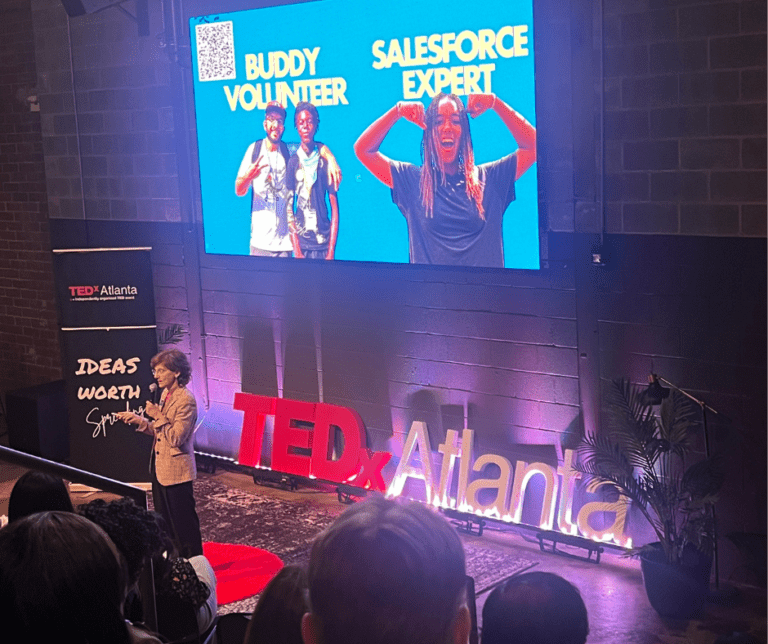
The format helped. It was part TEDx-style storytelling, part startup pitch and part skills-based volunteer matchmaking. Five nonprofit leaders took the stage for short talks, then moved into roundtable rotations where participants called “catalysts” could ask questions, scan QR codes and connect with specific volunteer roles created for that night. It was less about whether people wanted to help and more of where they could finally see themselves helping.
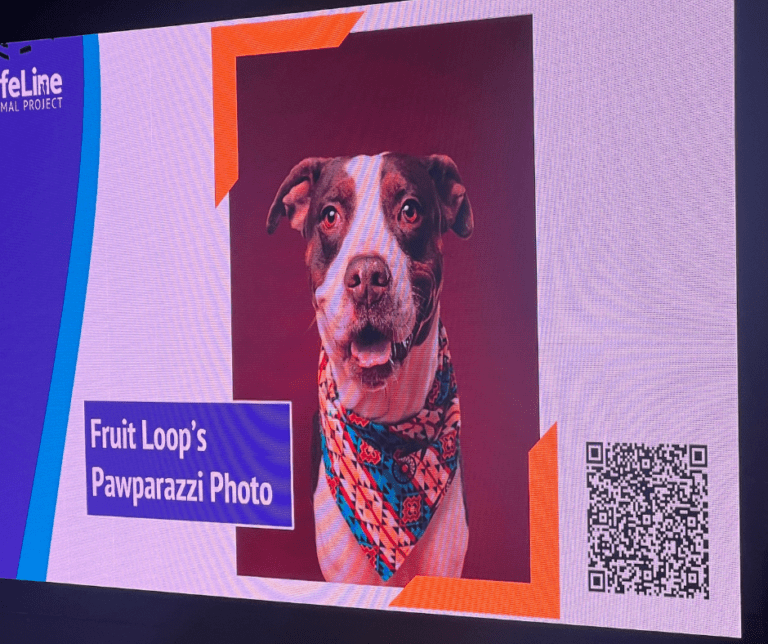
That was the difference. No vague call to “get involved.” The asks were specific. Kate’s Club needed buddy volunteers and Salesforce help. Welcome Co-op needed outreach support and stronger social media design templates. We Create Tech needed people who could host student experiences, lead hands-on workshops or help tell its story at scale. LifeLine Animal Project was looking for “pawparazzi” — volunteers who could photograph pets and write bios that might help them get adopted. Atlanta Community Food Bank framed volunteering in a way that felt refreshingly practical: if you like being behind the scenes, there is a place for you. If you want to work directly with people, there is a place for you there, too.
What made the evening work, though, wasn’t just the structure. It was the people.
There were moments all night that made the asks feel tangible. A Food Bank representative talking about helping someone figure out how to use donated duck fat. A description of gas prices making it harder for caregivers to get kids to Kate’s Club, which led the organization to bring the clubhouse into communities instead. A We Create Tech story about a student whose curiosity about how technology worked carried him from the classroom to a career in New York right out of college. A LifeLine Animal Project story about a dog named Fruit Loop, who always looked scared in the kennel until someone took a beautiful photo that got him adopted.
The energy in the room was not imagined. This TEDxAtlanta Salon welcomed more than 70 participants, and all dozen of so volunteer roles had multiple applicants before the evening was over.
In talking with Lisa Aman of Kate’s Club and Emily Laney of Welcome Co-op, what struck me was how warm they were. Not rehearsed. Just deeply present. The kind of people you want to keep talking to because their conviction felt lived in, not packaged. You could feel how much they cared, and not in a vague way. In a specific, practical, sleeves-rolled-up way. The same was true of the other leaders that night. They were compassionate, yes, but also clear-eyed. It left me feeling hopeful about the kind of people out there doing this work—and the kind of people still willing to show up for it.
Lisa spoke about grief with clarity and without sentimentality. In Georgia, she said, one in 10 children will grieve the death of a parent or sibling by age 18. “We don’t try to fix grief,” she said. “We try to make sure that no child carries it alone.” Kate’s Club put out a call for buddy volunteers who can show up consistently for children and families, and for a Salesforce support that can help scale its operations and reach to serve more kids. It was one of the clearest examples of the night’s larger point: some of the most meaningful forms of help are deeply human, and some are operational. Both matter.
Emily was equally candid about the pressure Welcome Co-op is under. It has been a hard year, she said. Needs are growing. Families already here need support while safety nets thin out. And still, what stayed with me from talking with her was not just the strain, but the energy she brought into the room. Once the roundtables began, she could feel people beginning to place themselves in the work. There were attendees, she said, who essentially had the same realization: wait, I know exactly what I can do to help.
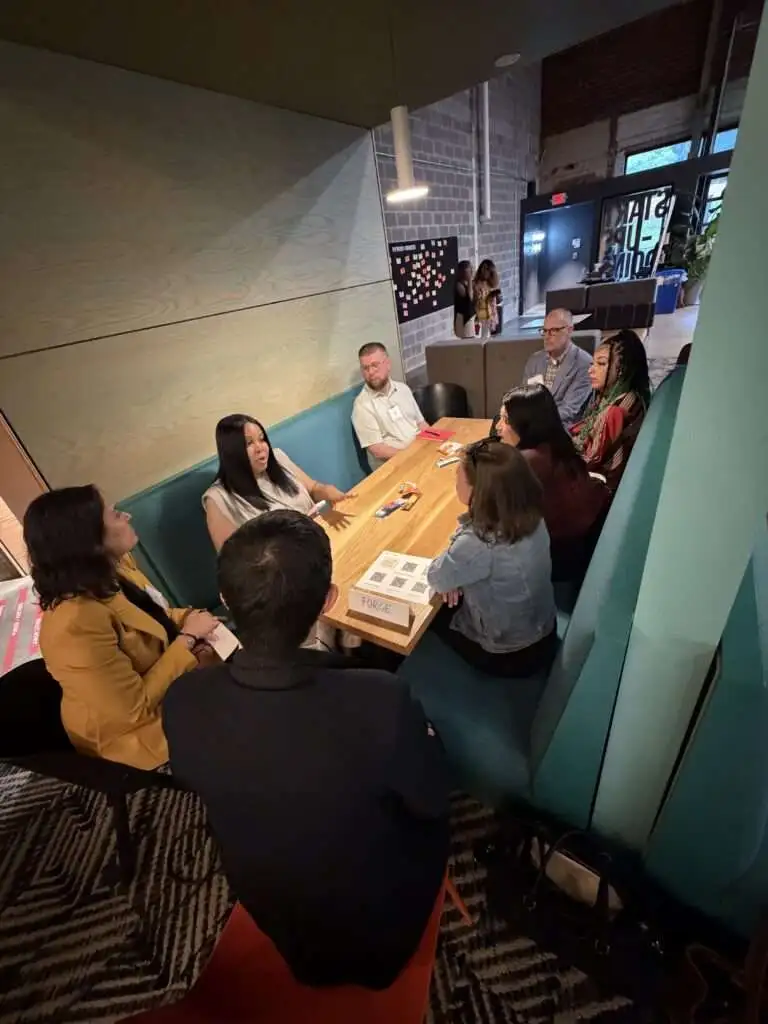
You could see that happening at the tables during the roundtable discussion segment of the evening. People leaned forward. Questions got more specific. Phones came out to scan QR codes. Someone offered grief-informed volunteer support. Someone else connected a Georgia Tech healthcare translation resource to the needs Welcome Co-op had described.
One attendee, Andrea Jordan, arrived at her first TEDxAtlanta event not quite sure what to expect. By the end of the night, she was talking about volunteering and praising the format for making it easy to connect with several organizations in one evening.
Even after the event officially ended, no one seemed in a rush to leave. People stayed in the room, talking in small groups, asking questions and making connections. It was a simple but telling sign that the night had done what it was meant to do.
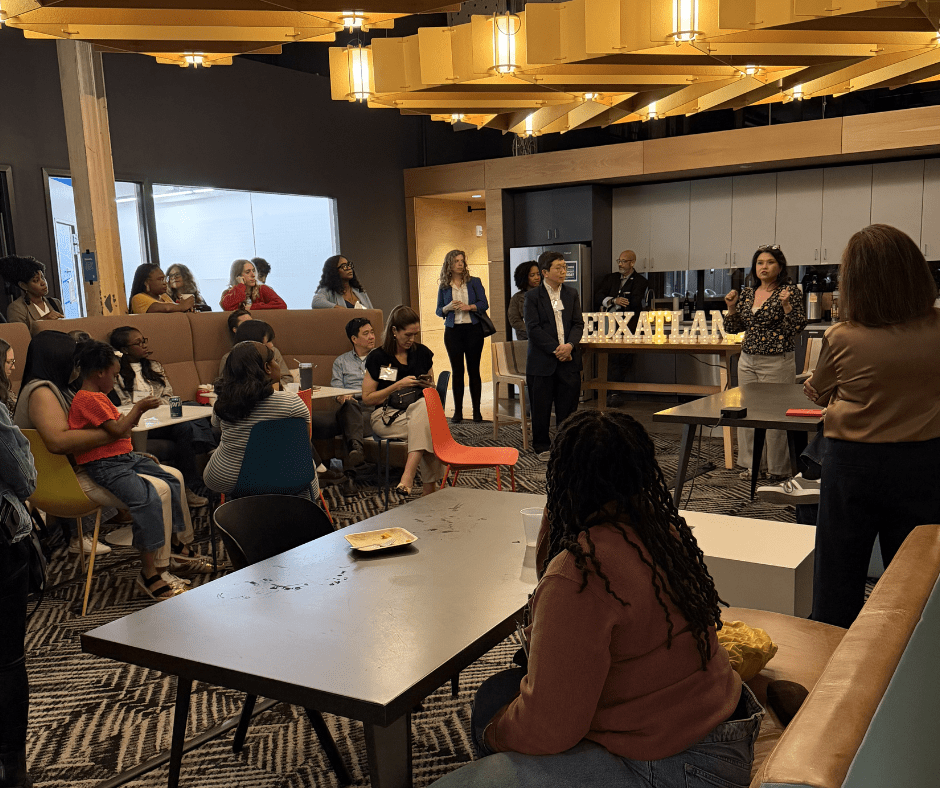
It would be easy to say this Salon attracted a room full of compassionate people, and it did. The format made it possible for participants to go beyond compassion to possibility and action.
That matters in the sprawling nature of metro Atlanta. Where transportation logistics often gets in the way of good intentions. It matters for nonprofit leaders who need skilled talent as much as they need awareness. And it matters for anyone who has ever thought, ‘I should get involved in this,’ only to let the thought pass.
For one evening in Atlanta, that distance between intention and action got shorter. The question was no longer whether to help. It was where to begin.
Education shapes lives in lasting ways. It influences opportunities, stability, and the ability to imagine a future beyond immediate circumstances. Yet for millions of young people around the world, access to quality education remains uncertain or out of reach.
The United Nations established January 24 as International Day of Education to recognize education’s role in peace and sustainable development. For 2026, UNESCO’s focus is especially timely: young people as partners in shaping modern, inclusive education systems.
Young people make up more than half of the global population. They are also the group most directly affected by how education works—or fails. Persistent barriers, from poverty and inequality to displacement and limited access to schooling, continue to shape what learning looks like and who benefits from it.
On International Day of Education, the challenge is not simply to value education, but to reconsider how it is designed and who gets a voice in that process.
That’s where the following TED Talks come in. Over the years, speakers have examined what supports learning, what undermines it and what might help education systems respond more effectively to a changing world.
Motivation is often framed as something students either possess or lack. Eliseo Fernández Barrionuevo suggests a different way of looking at it.
Drawing on research and experience across classrooms and countries, he explains how motivation can transfer from one context to another. Interests that students already care deeply about — sports, games, creative pursuits — can become entry points for learning when educators take the time to connect them to the curriculum.
Rather than asking why students seem disengaged, his work invites educators to notice where energy already exists. When learning feels relevant, motivation follows.
Rita Pierson’s talk centers on a truth that is easy to overlook in policy discussions: students learn best when they feel seen.
After decades in education, she argues that no amount of reform can replace the impact of human connection. One line captures her message plainly: kids don’t learn from people they don’t like.
Pierson speaks about teaching as relational work—apologizing when mistakes are made, recognizing progress even when it’s small, and refusing to write off the students who struggle most.
Her point isn’t about being nice for the sake of it. It’s about what works. Students are more willing to try, to listen and to stay when they feel a genuine connection to the adult in the room.
It’s hard to talk about education in 2026 without talking about artificial intelligence.
Sal Khan addresses common fears about AI in the classroom, then reframes the conversation. Used thoughtfully, he argues, AI could help address one of education’s long-standing challenges: providing personalized support at scale.
By acting as a tutor for students and an assistant for teachers, AI has the potential to expand access to feedback, guidance and practice — without replacing human educators. Khan emphasizes that design choices matter. The goal is not automation for its own sake, but tools that support learning rather than shortcut it.
International Day of Education is a moment to pause and reflect.
Education is a human right, but it is also a system shaped by decisions—around leadership, technology and whose perspectives are valued.
There isn’t one fix here. But there is a common thread: attention to how students experience learning, and who gets included when decisions are made.